Walking the Dingle Way: A Slow Journey Around Ireland's Wild Kerry Coast
 Cindi Sanden
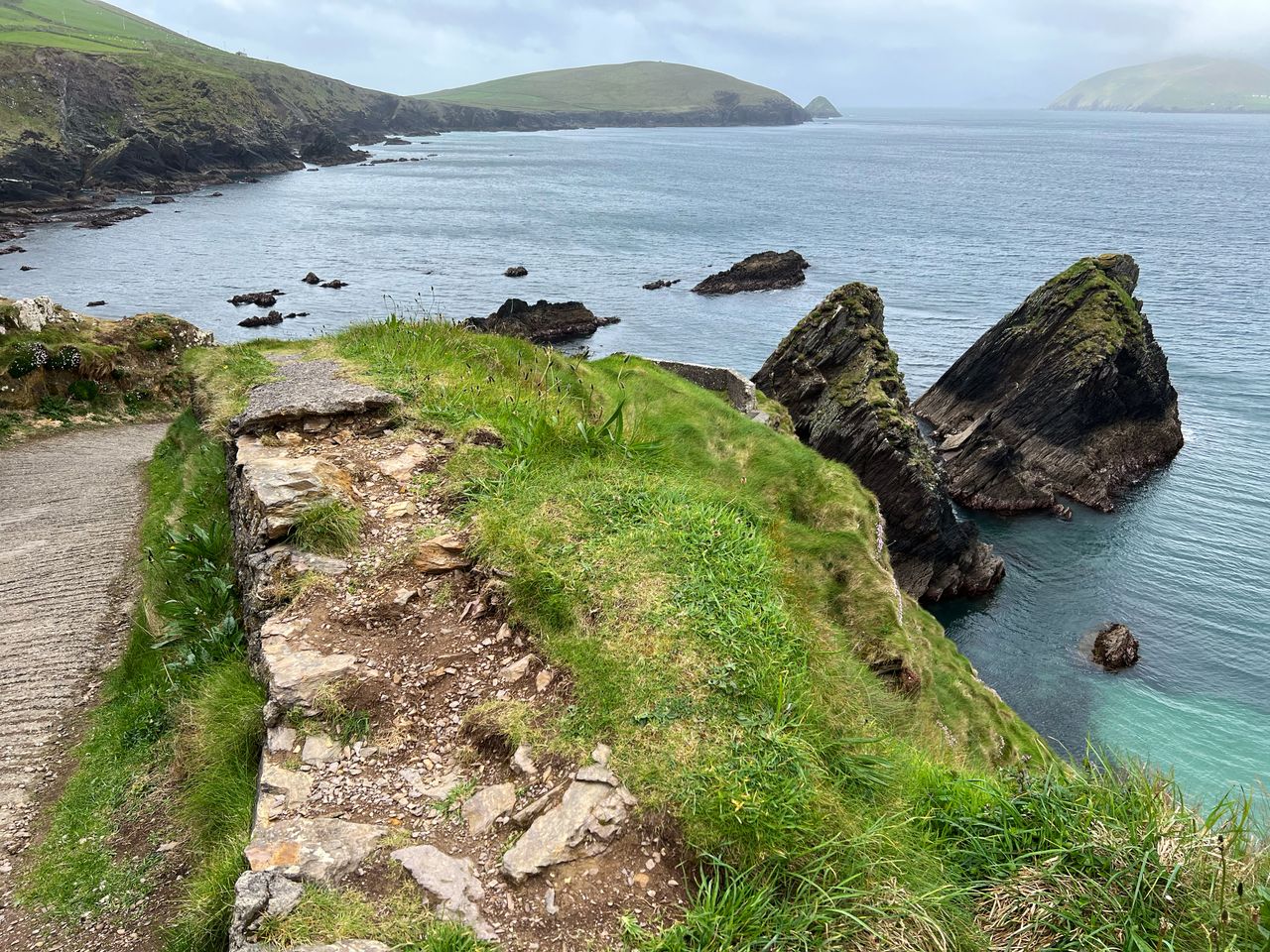
The lane leaves Dingle while the town is still half asleep, and you go with it, out past the last of the painted shopfronts and up between two stone walls where the fuchsia is already dropping its red flowers onto the tarmac. It is early. The air is soft and salt washed and smells of a rain that has not quite fallen yet, and somewhere a field away a dog is barking at nothing. The wall on your right gives out, and there it is, the whole western end of Ireland laid open in the grey morning light: green fields running down to black rocks, the Atlantic beyond them the color of hammered pewter, and far out on the edge of it a scatter of humped islands that seem to float rather than sit on the sea. That is the country you are walking into. Not the islands, they are a boat trip for another day, but the last green rim of land that faces them, the final parish before America, along a path that people have walked for longer than anyone can rightly say.
Your bag is already gone. Someone lifted it from the guesthouse after breakfast and is driving it the long way round the coast to tonight's bed, where it will be waiting by the time you come in off the hill. All you carry is a small pack: a rain jacket, because out here you will want it whatever the sky is doing at eight in the morning, a bottle of water, a bit of lunch, and a few euro for a pot of tea at the far end. Nothing on your back but the day itself.
This is the Dingle Way, one of the loveliest of all the long walks in Ireland, and you are doing it the gentle way. Not shouldering a heavy pack against the weather and the miles, nor watching the best of the coast slide past the window of a tour coach, but strolling from one small village to the next around the rim of a peninsula that hangs off the far southwest corner of the country, sleeping each night in a warm guesthouse, eating fish that was in the bay that morning, and letting somebody else carry the luggage round the headland. More of our travelers have been asking us about Ireland lately, and in particular about walking it rather than only driving it, so we went past the tour brochures and the booking sites to understand where this path really goes, what you actually pass out there on the edge of the sea, and how to walk it without giving up a single comfort. Here is what we found.
What walking the Dingle Way really means
The Dingle Way is a loop, and that is the first thing to understand about it. It runs right around the Dingle Peninsula, the northernmost of the long green fingers of land that reach out into the Atlantic from County Kerry, and it begins and ends in the same place, the market town of Tralee. All told it is about a hundred and eleven miles, which sounds a great deal until you spread it across eight unhurried days and realize you are walking perhaps twelve to fifteen miles a day, four to six hours of steady going with all the time in the world to stop. And you will stop constantly, because there is something to make you stop around almost every bend.
The walking is mostly easy, and where it is not, it is honest about it. You spend your days on boreens, the narrow walled lanes of the Irish countryside, on soft green roads that were the only ways between the farms before the tarmac ever came, on firm sand along enormous empty beaches, and on grassy tracks that contour along the flank of the hills with the sea always somewhere below you. There is one day that asks more of you than the rest, the crossing of the shoulder of Mount Brandon on the way to Cloghane, a high, wild, exposed stretch of open mountain where the weather can close in and the path becomes a thing you read carefully rather than simply follow. It is magnificent when the cloud lifts and serious when it does not, and if that is not your idea of a good day, we simply route you around it by road, and you lose nothing of the trip's heart.
You can walk it self guided, which is how most people do it, following a well marked route with your beds booked, your bags moved each morning, and a set of maps and notes that make it almost impossible to get lost. Or you can walk it guided, with someone to lead the way, carry the local knowledge, and meet you at the end of each day. Either way the essential trick is the same, and it is the thing that makes the whole trip work: your luggage travels by road while you travel by foot, so you set out each morning with nothing but a day pack and arrive each afternoon to find everything you own already waiting in your room. And you do not have to walk the entire loop to feel you have done it. The far western half, the two or three days out around Dingle and Slea Head and Dunquin, holds nearly all of the coast and nearly all of the ancient stones, and makes a wonderful shorter trip on its own.
A thumb of land at the edge of the world
To understand why walking here feels the way it does, you have to know one thing about this small peninsula: almost nowhere in Europe has so much of the deep past survived so thickly on the ground.
The people who study these things have counted more than two thousand recorded monuments on the Dingle Peninsula, packed into a spit of land you could drive across in an afternoon. There are standing stones that were set upright in the Bronze Age, some of them lined up on the exact point of the horizon where the sun goes down at midwinter. There are the round earthen banks of ring forts, the farmed homesteads of iron age and early Christian families, so many of them that no one has ever counted them all with any confidence. And there are more than sixty ogham stones, tall stones notched along their edges with the earliest form of writing ever used for the Irish language, a spare alphabet of lines and grooves cut into the rock in the fourth and fifth centuries. Corca Dhuibhne, the old Irish name for this place, has been called the home of ogham. You do not go and visit this history in a museum here. You walk straight past it in a farmer's field, with the sheep grazing around its base.
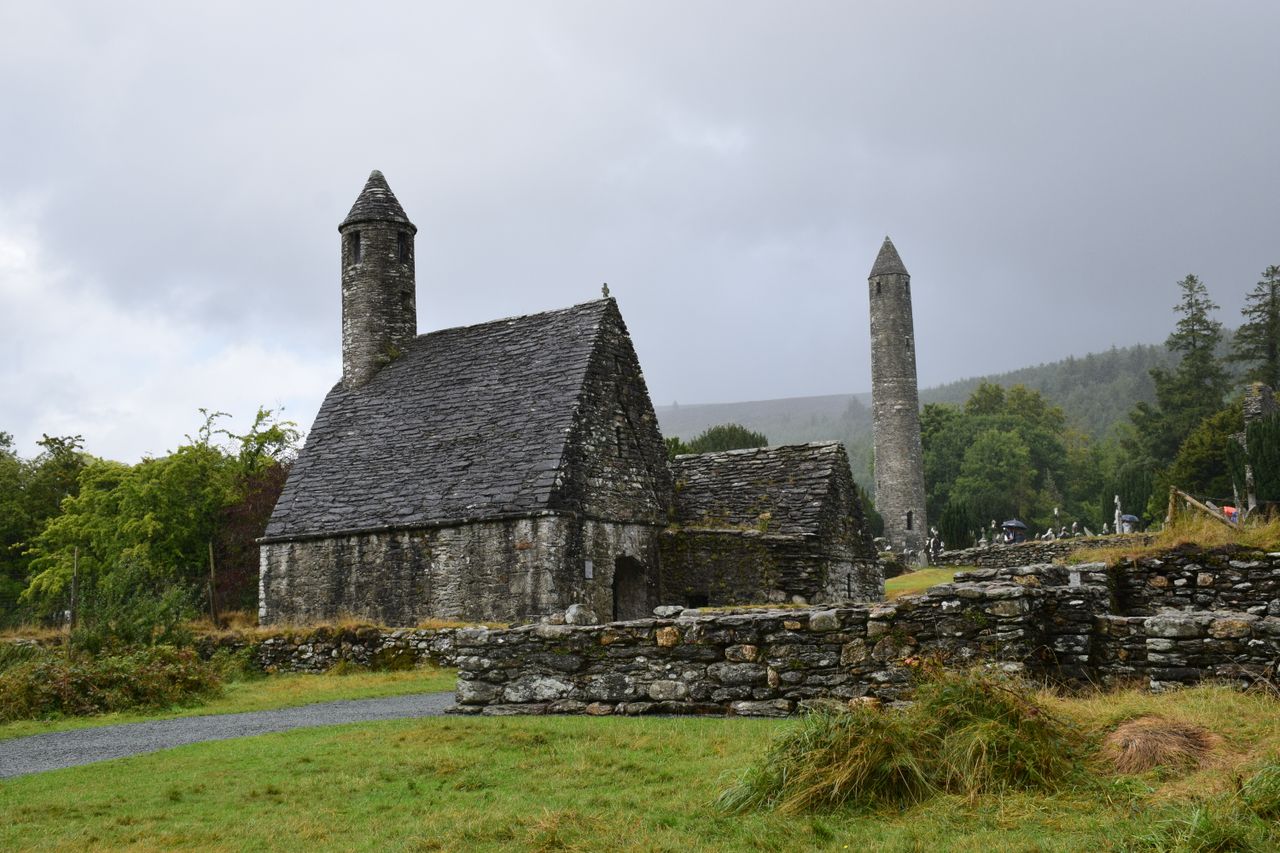
But the thing this coast is really known for, the thing you come over a rise and catch your breath at, is what the early Christian monks left behind. In the centuries after Saint Patrick, when much of Europe had slid into what we used to call the dark ages, it was monks on the far western edge of Ireland who kept reading and writing and copying books by hand, and some of the most devout of them came out here, to the very end of the land, to be alone with God and the weather. They built without mortar, fitting dry stones together with nothing but skill and patience, and some of what they built is still standing after more than a thousand years. On the slopes above Slea Head you pass clochans, little round beehive huts of corbelled stone, each ring of stone stepped in slightly over the one below until the walls close in a dome overhead, some of them still keeping the rain out today. And near the village of Ballydavid stands the Gallarus Oratory, a tiny church shaped like an upturned boat, laid up in dry stone somewhere around twelve or thirteen hundred years ago, and still, after all those centuries of Atlantic storms, completely watertight inside. No mortar. No real repairs. Just stones set by someone who understood exactly what they were doing, and gravity, and time.
And it was from this coast, or so the story has always gone, that one of those monks set out to find heaven. Saint Brendan the Navigator, born in Kerry around the year 484, is said to have sailed west from the foot of the mountain that now carries his name, Mount Brandon, in a currach, a light boat of tarred hide stretched over a wooden frame, looking for a promised land somewhere out beyond the sea. The medieval account of his voyage, written down centuries later and copied all across Europe, is full of marvels: an island that turns out to be a whale, a floating mountain of crystal, a coast of fire. For a long time it was read as pure legend, a monk's dream. Then in 1976 a British adventurer named Tim Severin built a currach the old way, of ox hides and ash, and sailed it from Kerry across the north Atlantic to Newfoundland, proving that whatever Brendan did or did not find, the voyage itself was possible, that a leather boat really could have carried Irish monks toward America a thousand years before Columbus. When you stand on the shoulder of Brandon and look out at that huge grey ocean, the story does not feel nearly as far fetched as it should.
There is one more thing that has survived out here that you cannot photograph, and it may be the most remarkable of all. The far west of the peninsula is a Gaeltacht, one of the last regions where Irish is still the everyday language, spoken in the shops and the kitchens and the schoolyards, not as a revival or a lesson but simply as the way people talk. You will hear it as you walk through Dun Chaoin and Baile an Fheirtearaigh, on a radio in a farmhouse, in the greeting of a man mending a wall. English is everywhere too, and everyone will happily speak it to you, but the older tongue is still alive here in a way it is almost nowhere else, carried along the edge of the Atlantic through a thousand years of history that did its level best to end it.
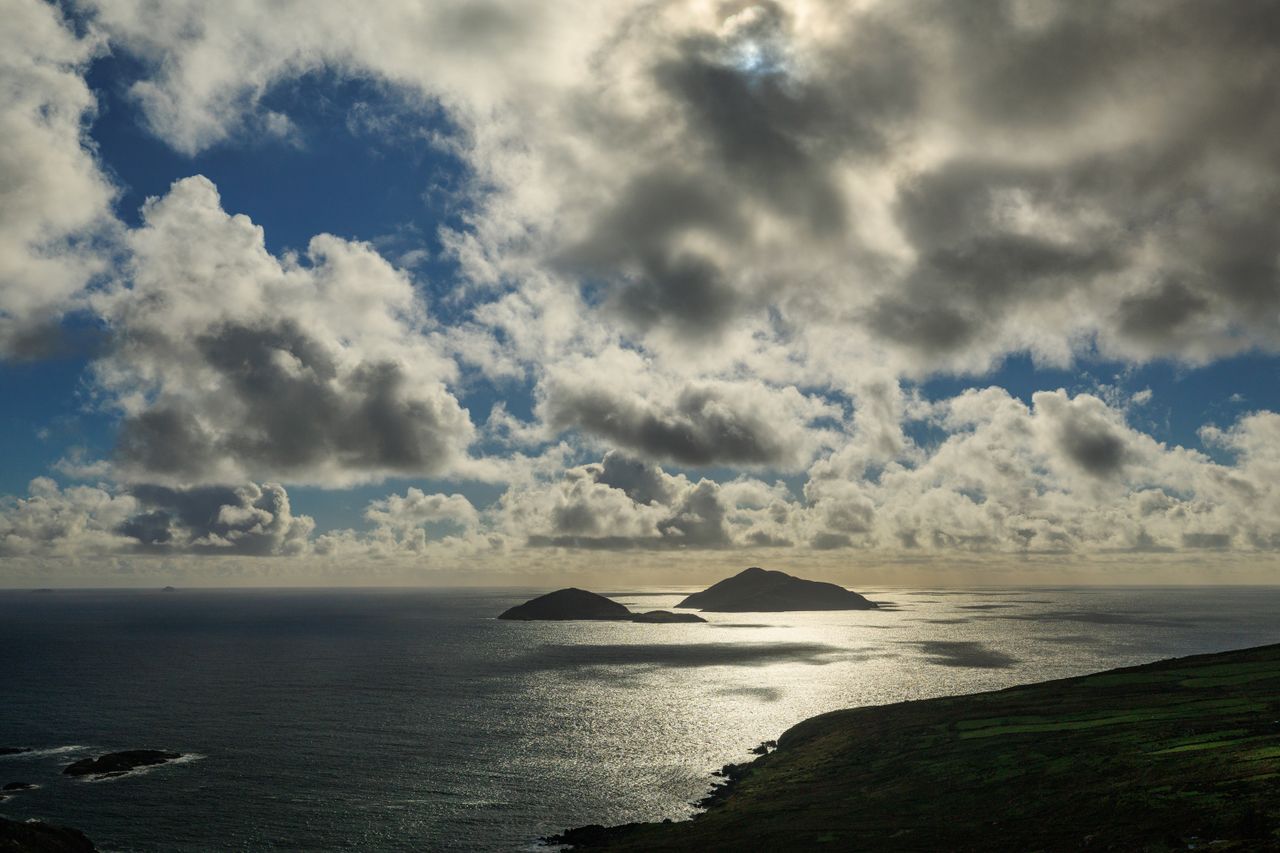
You will see the reason for that, and the cost of it, out beyond Dunquin. A few miles off the tip of the peninsula lie the Blasket Islands, and on the largest of them, the Great Blasket, there lived until quite recently a small community of a few hundred people, entirely Irish speaking, farming and fishing on a green whaleback of rock in the open ocean. In the 1920s and 1930s, urged on by scholars who came to learn their pure old Irish, some of these islanders wrote down their lives, and what they produced is one of the strangest and most moving small libraries in the world. A fisherman named Tomas O Criomhthain wrote a spare, dry, unforgettable memoir called The Islandman, which ends with a line that has become famous in Ireland: the like of us, he wrote, will never be again. An old woman named Peig Sayers told her life story aloud, and generations of Irish schoolchildren grew up reading it. A young man named Muiris O Suilleabhain wrote a book called Twenty Years A-Growing about what it was to be young on the island and then to leave it. And leave it they all did in the end. The young sailed for America, the community dwindled, and in 1953 the government took the last of the islanders off, because there were too few of them left, and too old, to be safe out there through another winter of storms. Their houses stand empty now, roofless, on the green slope across the sound, and you can take a boat over on a calm day and walk among them. From the mainland path you simply see the island lying there in the water, and looking at it you understand something about why the language matters so fiercely here, and what it meant that it held on at all.
The villages you walk between
The walk strings together a handful of villages, each a day or so apart, and the pleasure of it is how unalike they are, and how each one gives you something the others cannot.
Tralee, where you begin and end, is a proper Kerry town, unshowy and friendly, with a good buzz about it and no particular need to charm you, which is its own kind of charm. From there the first day carries you along the base of the Slieve Mish mountains, a long green ridge with a very old story attached: it was here, the ancient Irish tale of the taking of Ireland says, that the Milesians, the legendary ancestors of the Gaels, fought and won one of their first battles on Irish soil. You walk out of the town and more or less straight into myth, with Tralee Bay opening away on your right hand.
Annascaul comes next, and it holds one of the great surprises of the whole route. This small inland village, hills gathered around it, is the home of the South Pole Inn, a pub opened by a man named Tom Crean. Crean was born on a farm just up the road in 1877, went off to sea with the Royal Navy as a boy, and became one of the toughest and most quietly heroic polar explorers who ever lived, a veteran of three expeditions to Antarctica, among them Scott's last and Shackleton's Endurance, the one where the ship was crushed in the ice and every last man somehow came home alive. Crean was in the tiny lifeboat that crossed eight hundred miles of the worst ocean on earth to fetch help for the others, and on an earlier journey he once marched alone for eighteen hours across the ice to save a friend's life. And when it was all over he came home to Annascaul, opened this pub, put his medals away in a drawer, and by every account almost never spoke of any of it again. You can sit in his bar today, under the old photographs, and drink to him. It is a fine thing to do on foot, in the middle of a long walk, to raise a glass to a man who understood better than almost anyone alive what it is to keep putting one foot in front of the other.
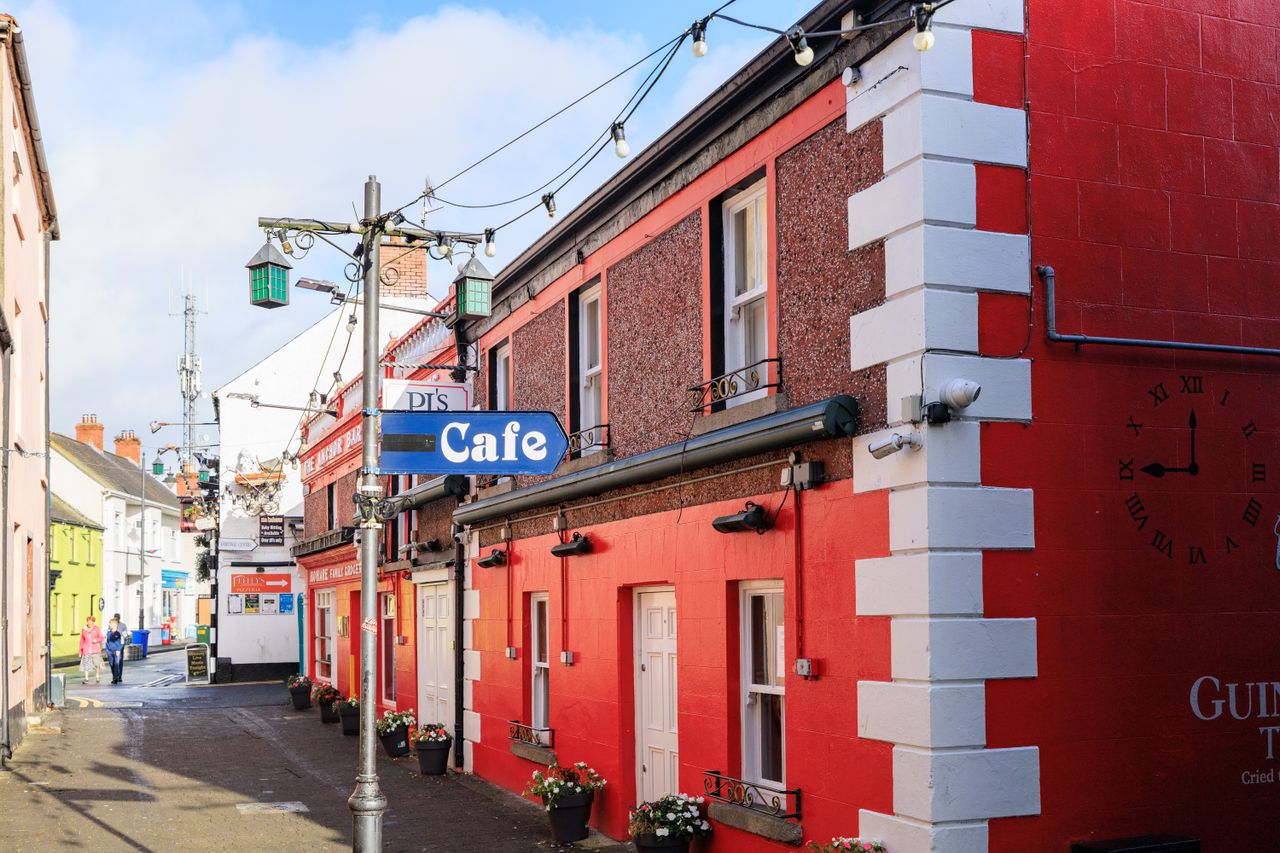
Dingle itself, An Daingean in Irish, is the heart of the peninsula and the one real town on the walk, and it is a delight. It curls around a sheltered harbor, a jumble of brightly painted houses and shopfronts, and for such a small place it has an outsized reputation for two things: seafood and music. This was a serious port once, trading wine and hides with Spain when most of the traffic of this coast still went by sea, and it keeps the outward looking, easygoing feel of a harbor town to this day. In the evenings the pubs fill up with traditional music, not laid on for anyone in particular but simply happening, a fiddle and a box and a bodhran going in the corner, and the seafood that comes out of the kitchens was mostly swimming in the bay that same morning. If you plan your walk so that you have an evening and a full day here, you will not regret a minute of it.
Beyond Dingle the land runs out toward the very end of things. Dunquin, Dun Chaoin in Irish, is the westernmost village in Ireland, a scatter of houses on a steep green coast looking straight out at the Blaskets, and it is quiet and windblown and unforgettable, the sort of place that gets right into people. The film Ryan's Daughter was made out here, which brought the wider world to the parish for a while back in the 1970s, but Dunquin has long since gone back to being simply itself, the last stop before the Atlantic. Then the path curves north to Ballyferriter and Ballydavid, small Irish speaking villages set among the richest cluster of ancient sites on the whole peninsula, Gallarus and Kilmalkedar and the old monastic settlements, before the last hard and beautiful day over the shoulder of Mount Brandon and down into Cloghane, a tiny village on a wide northern bay where the walk begins its long turn back toward Tralee.
The rhythm of the days
What people are surprised by, again and again, is how good the shape of these days turns out to be, and how quickly you give yourself over to it.
It starts with breakfast, and an Irish breakfast is a serious foundation for a day on your feet: eggs and rashers and warm soda bread and strong tea, eaten slowly in a bright room while the weather makes up its mind outside the window. You hand over your bag, you step out the door, and the day is entirely yours. The walking settles into an easy rhythm almost at once, the boreens and the green roads unrolling ahead of you, the stone walls close on either side, a robin keeping pace with you along the top of the hedge. The weather is part of it, and you soon stop fighting it: a squall blows in off the sea and soaks the whole world for ten minutes, and then the sun comes through behind it and lights up every wet blade of grass, and a rainbow stands up over the next hill as if it were the most ordinary thing in the world, which out here it is. You pass a farmer who lifts a hand to you. You pass a holy well with a faded rag tied to the thorn tree above it. You sit on a wall to eat your lunch with the whole Atlantic laid out in front of you.
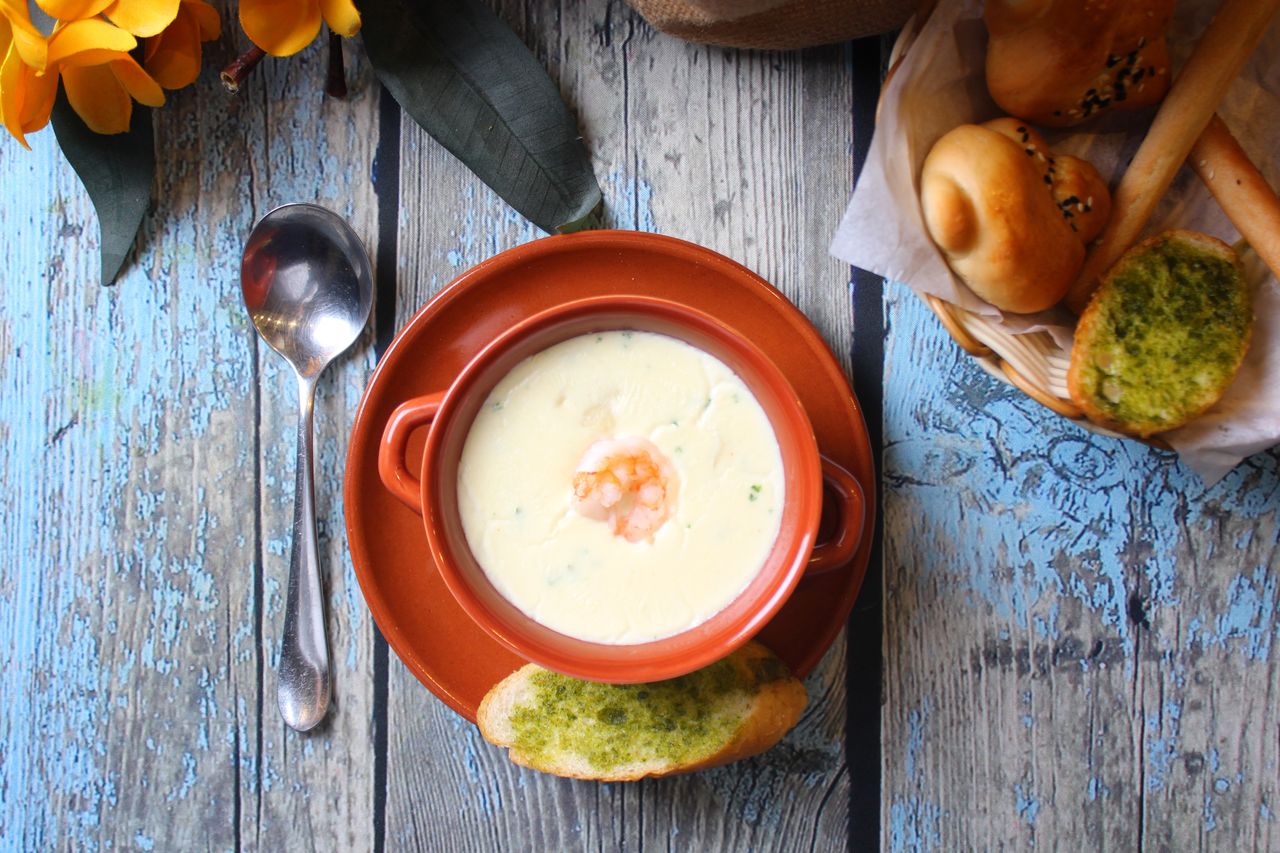
And then, somewhere in the middle of the afternoon, you come down off the hill into the village where you are sleeping, and your bag is already there in a warm room in a guesthouse where the owner has the kettle on before you have your boots off. You wash the day away, and you go out to eat, and the food is the coast on a plate: a deep bowl of seafood chowder thick with fish and mussels, a heel of brown bread still warm from the oven, a plate of prawns straight out of the bay, a piece of fish that could not be any fresher, and something dark and cold to go beside it. And then, because this is Ireland and it would be very nearly rude not to, you find the pub with the music in it, and you settle into the warm noise of the place with a small whiskey while a few local people play tunes older than the roads you walked in on, and the rain ticks softly against the window, and you feel, right down to your tired and happy feet, a very long way from everything you came here to get away from.
When to go, and who it is for
The single honest truth about the Dingle Peninsula is that the weather does exactly as it pleases, and the sooner you make your peace with that the happier you are going to be. This is the wild Atlantic edge of Ireland, and it is this green for a reason. You can catch a week of soft golden days in May, and you can catch sideways rain in July, and most likely you will get a little of everything inside a single afternoon. So we do not chase perfect weather here, because there is no such thing to chase. We chase the best odds and the best light, and those come in the late spring and the early autumn.
Late May and June are our favorite time of all, the days long and often kind, the hedges thick with wildflowers, the whole peninsula an almost unreasonable green. September into early October is the other sweet spot, the summer crowds gone home, the light turned long and golden, the fuchsia hedges dropping their red flowers along every lane, and the sea still holding a little of the summer's warmth for anyone brave enough to swim. High summer, July and August, is perfectly walkable and at its liveliest in the villages, but it is also the busiest stretch and the wettest odds are no better, so where people have the choice we gently steer them toward the shoulders of the season. Winter can be wildly beautiful and is wonderfully quiet, but the days are short and a good many places close their doors, so we save it for a different sort of trip.
As for who it is for, the honest answer is nearly anyone reasonably fit who likes the idea of a long, soft, green walk and does not mind a bit of weather with it. You need to be steady on your feet and content to be out for four to six hours, and you need proper boots and a real rain jacket, but you do not need to be an athlete in any sporting sense. The one genuinely demanding day, the Mount Brandon crossing, we can route you around completely, and the whole thing can be shortened to just the glorious western half if a full week on foot is more than you are after. It makes a wonderful trip for a couple, for a few friends walking together, and it is a kind and safe walk for the solo traveler, who will rarely stay lonely for long in a country this quick to fall into talk with you. Best of all, it folds beautifully into the rest of the southwest. A few days on the Dingle Way sit naturally alongside the lakes and mountains of Killarney, a boat out toward the Skelligs, the long slow drama of the Ring of Kerry, or a night or two in the food and music of Cork, so that the walk becomes the wild green heart of a much larger Irish journey.
Why we love a walk like this
We plan a great deal of travel to Ireland, and much of it is a joy from behind the wheel of a car or the window of a good hotel. And still, this walk holds a place all its own, because it gives people something that no drive ever quite can.
Walking puts this place back to the size it was built at. For thousands of years, nobody out here moved any faster than you are moving right now. The monks who stacked those stones, the families who cut those green roads between their fields, the islanders who rowed to the mainland and rowed home again, the whole long human story of this coast happened at exactly the pace of a person walking, and to travel it on foot is to feel that story in your legs and your lungs rather than only read it off a sign. You understand, in a way no car can ever teach you, why a monk would come all the way out here for silence, why a language could hold on so stubbornly in a place this remote, why every field is walled and every one of those walls was built by somebody's hands. You feel the distances. You feel the weather. And you feel the particular quiet joy, at the end of a long green day, of having genuinely arrived somewhere on your own two feet, at the last edge of Europe, with the Atlantic in front of you and nothing beyond it but the sea. People come back from a walk like this a little changed, a little slowed down, carrying the calm of it home with them, and they go on talking about it for years.
Let us plan your Dingle Way walk
The magic of a trip like this is that it feels effortless precisely because every last piece of it was arranged long before you laced up your boots. The right guesthouses in the right villages, the ones with the warm welcome and the good breakfast. The bag that travels by road while you walk over the hill. The route notes and the maps, or the guide who knows every stone by name. The one hard day smoothed out or skipped. The timing set to catch the coast at its greenest and the season at its kindest. That is the part we love most, and the part you never have to think about at all.
If a week of soft green days on the far western edge of Ireland, walking from village to village with the Atlantic beside you and your bag waiting at the end of every one of them, sounds like your kind of travel, let us build it around you. We will choose the places to stay that we think you will love, set the timing to give you the best of the weather and the light, arrange the luggage and the transfers and a guide if you want one, and fold the walk into a larger journey through Kerry and the Irish southwest, wherever your heart is pulling you. The gentle version, just the glorious days out around Dingle and Slea Head, or the full loop of the whole peninsula. All you have to do is walk.
Reach out any time. We would love to help you plan a walk along this old green coast that you will still be talking about long after your boots are back by the door.