Walking the Path of the Gods: A Slow Journey Along Italy's Amalfi Coast
 Cindi Sanden
The path slips out of the village of Bomerano and runs off along the flank of the mountain, and you go with it. It is early, and the air still holds the cool of the night, sharp with wild fennel and the rosemary that grows straight out of the rock. Far below you, so far that the fishing boats leave no wake you can hear, lies the sea, a single hammered sheet of blue running all the way to the edge of the sky. The trail underfoot is old. It was cut and worn and walked by people who had no other road, no way to reach the next village except to set one foot in front of the other along this ledge between the mountain and the water. Ahead of you the whole coast unrolls in the morning light: gray cliffs, green terraces stitched into them by hand, a white village spilling down a distant ravine. Positano is down there somewhere, a good many hours away on foot and the better part of two thousand feet below, and you are going to walk to it along the top of the world.
Your bag is already gone. Someone lifted it from the hotel after breakfast and is driving it the long way round to tonight's room, where it will be waiting by the time you come down off the mountain. All you carry is a small pack: water, a hat against a sun that will find you all day up here, a light layer in case the weather turns, and a few coins for a lemon granita at the end. Nothing on your back but the day itself.
This is the Sentiero degli Dei, the Path of the Gods, the most famous and the most beautiful walk on the Amalfi Coast, and you are doing it the civilized way. Not white knuckled in a coach on the cliff road below, nor shouldering a heavy pack against a clock, but strolling the high line from one cliff village to the next, sleeping each night in a good hotel with the sea under your window, eating food you will think about for years, and letting someone else carry the luggage around the headland. More of our travelers have been asking us about the Amalfi Coast lately, and in particular about walking it rather than just driving it, so we went past the tour brochures and the booking sites to understand where this path really comes from, why it hangs where it does between the sky and the sea, and how to walk it yourself without giving up a single comfort. Here is what we found.
What walking the Path of the Gods really means
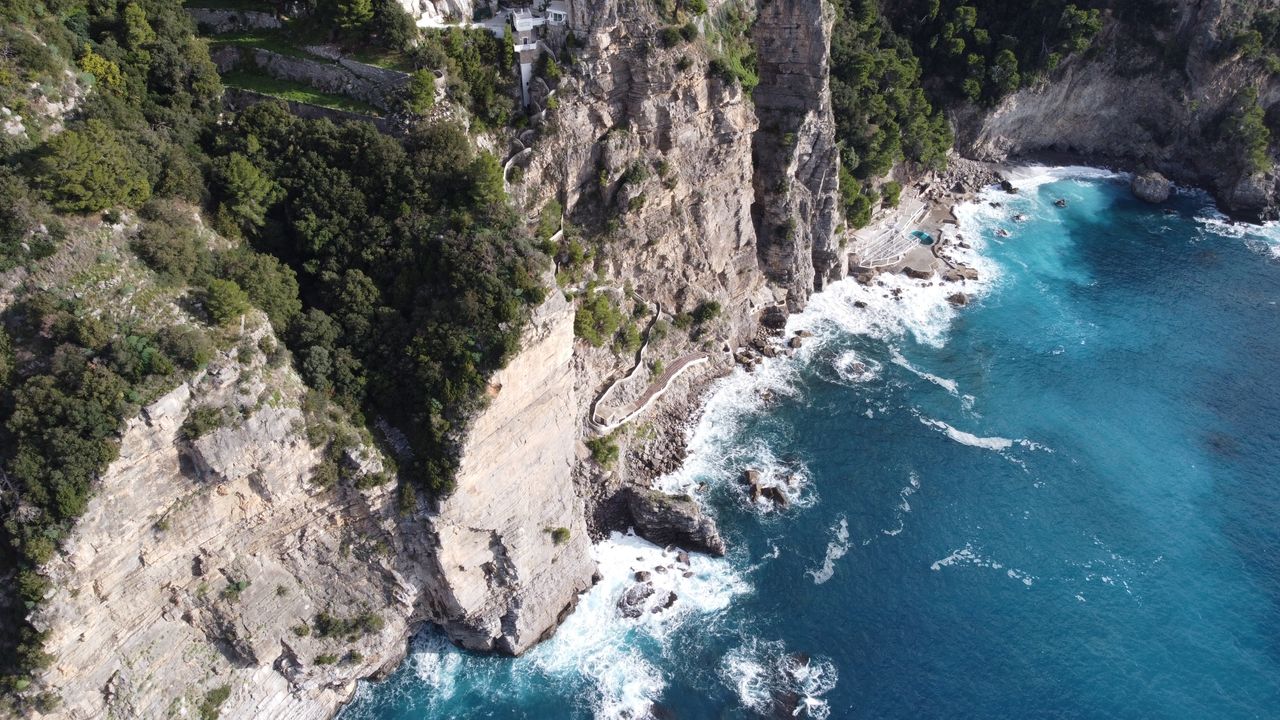
The walk runs between two little mountain villages that most people have never heard of, which is part of its charm. It begins in Bomerano, a hamlet of the town of Agerola that sits high on a green plateau above the coast, and it ends in Nocelle, a cluster of houses that belongs to Positano and clings to the slope a few hundred steps above it. From end to end it is about five miles, three to four hours of walking with time to stop and stare, and the reason it feels so gentle is that both ends are already high up. You are not climbing a mountain. You are walking along the side of one, on a ledge that hangs somewhere around fifteen hundred feet above the water the whole way, so the sea is always there below your left shoulder and the effort is mostly in your eyes.
Direction matters, and we almost always send people the same way, from Bomerano toward Nocelle, walking east to west. Go that way and the great view is in front of you the entire time, the coast opening ahead toward Positano and the island of Capri on the horizon, and the path runs mostly level or gently down rather than up. Go the other way and you spend the day with your back to the best of it, climbing. At the Nocelle end there is one honest bit of work left, a long staircase of around fifteen hundred stone steps that drops down into Positano, which is wonderful on fresh legs and punishing on tired ones, so when we plan it we simply put you on the little local bus for that last descent if you would rather save your knees for dinner.
The walking itself is easy to moderate and asks nothing athletic of you. It asks only that you be steady on your feet, comfortable on a stony path with a real drop beside it, and willing to be out in the sun, because there is almost no shade up on that ledge from one end to the other. You can walk it guided, with someone arranging every hotel and meeting you along the way, or self guided, following a route so well trodden and well marked that you cannot lose it, with the beds and the luggage and the transfers all sorted in advance. Either way the hours on the path are yours. And a single day's walk is only the beginning of what can be done here. The coast is laced with old trails, and a good trip can string several days of them together, a different village and a different terrace of the sea each evening, with the Path of the Gods as the jewel in the middle.
A coast the sea built, and a road that came late
To understand why this path exists at all, and why walking it feels the way it does, you have to know one strange fact about this coast: for almost all of its history, it had no road.
The mountains here do not slope down to the water. They fall into it. There was simply nowhere to lay a road along the base of cliffs that drop straight into the sea, and so for century upon century the villages of the Amalfi Coast lived with their backs to the land and their faces to the water. Everything came and went by boat. And everything that had to move on land, a bride, a priest, a load of lemons, a family fleeing a raid, moved on paths exactly like this one, mule tracks and stone stairways scratched across the mountainside to link one village to the next. When Saracen pirates came off the sea to burn and plunder, and for hundreds of years they came often, these high paths were the way up and out, the escape route into the hills where the boats could not follow. The trail you are walking was not built for the view. It was built because there was no other way through.
The coast road that everyone knows now, the vertiginous ribbon that the buses and the little cars thread today, is astonishingly young. The first stretch of it was cut and opened only in 1853, and it did not reach as far as Positano until the 1890s. Your own great grandparents were alive in a world where the only way to arrive at these towns was still by sea or on foot, the way you are arriving now. Hold that in your mind on the path, and the whole thing tilts. You are not on a scenic detour from the road. You are on the original, and the road is the newcomer.
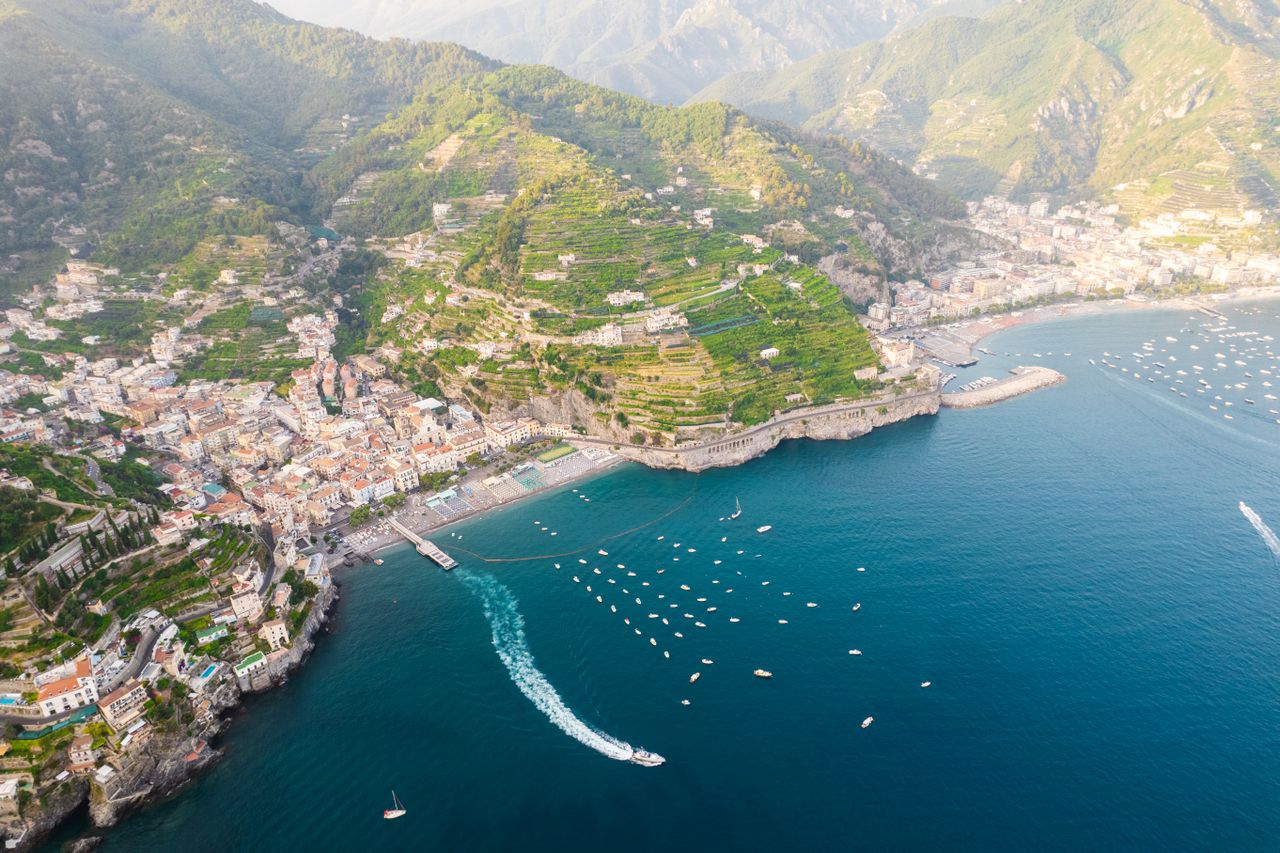
And here is the twist that makes it all the stranger: this roadless, cliff bound little coast was once one of the great powers of the Mediterranean. Amalfi, the town that gives the whole shore its name, shrugged off its distant Byzantine rulers and elected its own doge in the year 958, and for the next two centuries this republic of a few thousand souls on a shelf of rock ran one of the busiest trading fleets in the sea. Amalfitan merchants kept a whole quarter in Constantinople and dealt through the ports of North Africa and the Holy Land, carrying timber and cloth one way and gold and spices and silk the other, and they did it while Venice was still a young rival rather than a giant. They wrote the rulebook the others sailed by, the Tavole Amalfitane, a maritime code so sensible it was used across the Mediterranean for hundreds of years, and their town is woven into the very story of the mariner's compass. All of that wealth, all of that reach, from a place with no farmland worth the name and no way out but the waves. When you look down from the path at the little harbors far below, you are looking at what is left of a sea empire.
The name of the path is younger, and softer. The old story, the one the local people still tell, is that the gods themselves came down this way. When Ulysses sailed home past this coast, so the legend goes, the sirens whose island lay just offshore tried to sing him onto the rocks, and the gods of Olympus, fond of their clever mortal, came striding along these very heights to save him. The island is real, and you can see it from the path, the little scatter of rock called Li Galli that sits in the blue below Positano, named for the sirens who were once imagined as part bird. The actual christening, though, was done by a man. In the nineteenth century a statesman and dedicated mountain walker named Giustino Fortunato came through, stood about where you are standing, and pronounced it the Sentiero degli Dei, the Path of the Gods. The name stuck for the simplest of reasons. Anyone who walks it understands it inside of ten minutes.
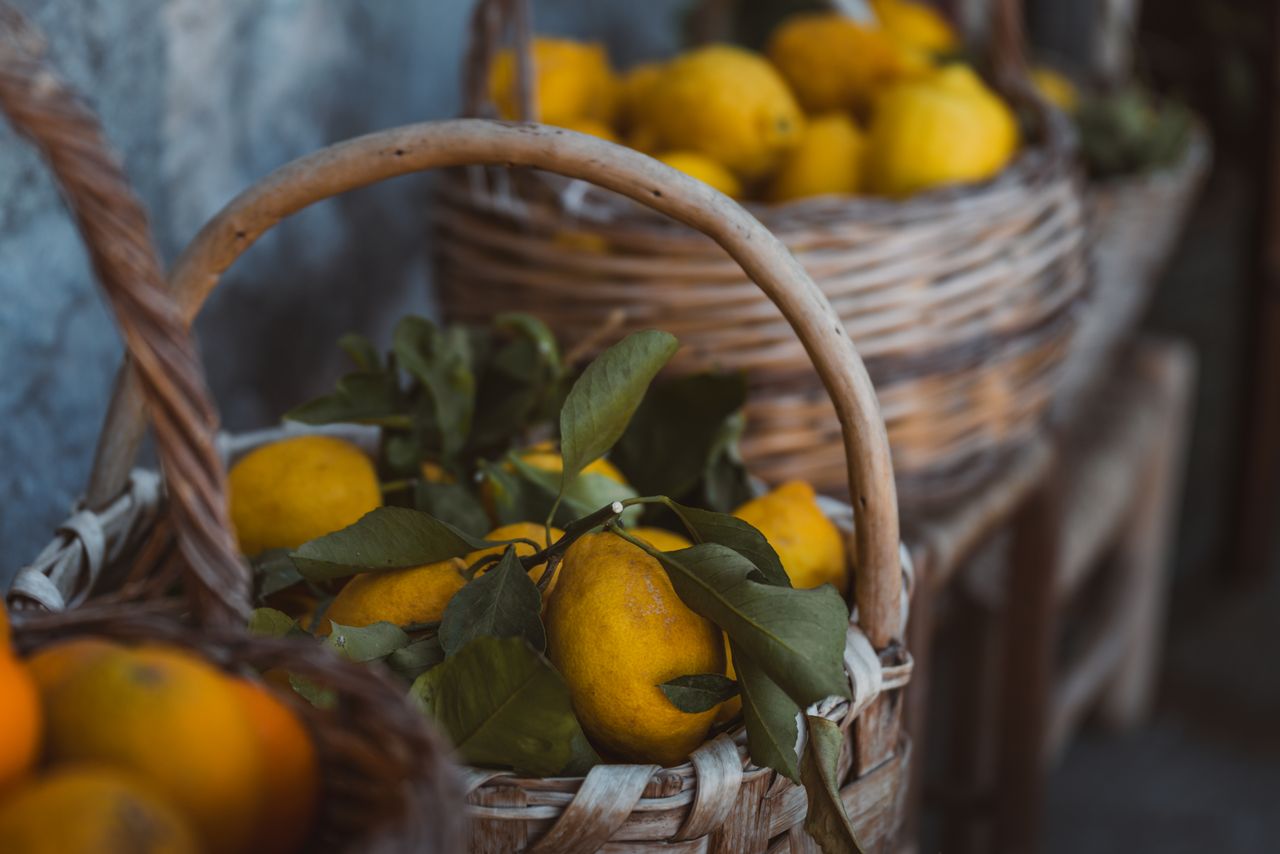
Look down as you go and you will see the other great labor of these mountains, and it is not a temple or a fortress but a garden. Nearly every slope you can see has been terraced, cut into step after patient step and held up by dry stone walls the local people call macere, some of them twenty feet high, laid without a drop of mortar from stones cleared off the land itself, the largest at the bottom and the smallest at the top so that water and air can move through them and the whole mountainside does not slide into the sea. On those terraces grow the lemons this coast is famous for, the sfusato amalfitano, long and tapered like a spindle, with a thick knobbled skin so fragrant you smell a grove before you round the corner and see it. People have been growing them here since the Middle Ages, training the branches over pergolas of chestnut poles cut in the woods above so the heavy fruit does not tear the limbs, and it is such steep, brutal, hand over hand work that the men and women who still do it are known without a scrap of irony as the heroic farmers of the Amalfi Coast. Every wall you pass on the path was stacked by somebody, stone by stone. Some of them are a thousand years old and still holding.
The villages you walk between
The walk is really a story of two mountain hamlets and a famous town, with the long open ledge of the path strung between them, and each one gives you something the others cannot.
Bomerano, where you begin, sits up on the cool green plateau of Agerola, a world away from the heat and the crowds of the coast below. It is a working mountain village, not a resort, known across the region for its bread and for its fresh mountain cheeses, the milky fiordilatte that ends up on half the pizzas in Naples. You start here in the shade of the church square, fill your water bottle, and walk out of town onto the path, and within a few minutes the plateau ends and the whole coast drops away in front of you. It is one of the great openings of any walk anywhere.
Then comes the long traverse, and this is the heart of the day. The path contours along the mountainside, dipping through folds and shoulders of rock, and the sights come one after another. You pass beneath the Grotta del Biscotto, an immense overhanging cave in the cliff face with the ruins of old shelters and animal pens tucked under its lip, a reminder that people did not just pass this way but lived and worked up here. You cross terraces where a farmer may be bent over his vines or his lemons. You walk through pockets of holm oak and stands of wild broom that turn the slopes yellow in spring. And always, on your left, there is the drop and the blue, and out in it the shapes you will learn by heart: the island of Capri riding the horizon, the little rocks of Li Galli, the long finger of the Punta Campanella reaching out toward Capri as if the mainland were trying to touch it.
Near the end the path brings you to Nocelle, and it is a special place. A tiny hamlet of a few hundred people pinned to the slope beneath Monte Pertuso, the pierced mountain, which takes its name from the natural hole worn clean through the rock near its summit, a window of sky that the old stories credit to the Archangel Michael. Until remarkably recently Nocelle had no road at all. The only way in or out was on foot, down the long stair to Positano or along the path you have just walked, and even now it keeps the feel of the last quiet corner of the coast. There are a couple of small terraces here where you can sit under a lemon pergola with a plate of pasta and a cold granita and the entire Gulf of Salerno spread out beneath your table, and most people find they do not want to get up.
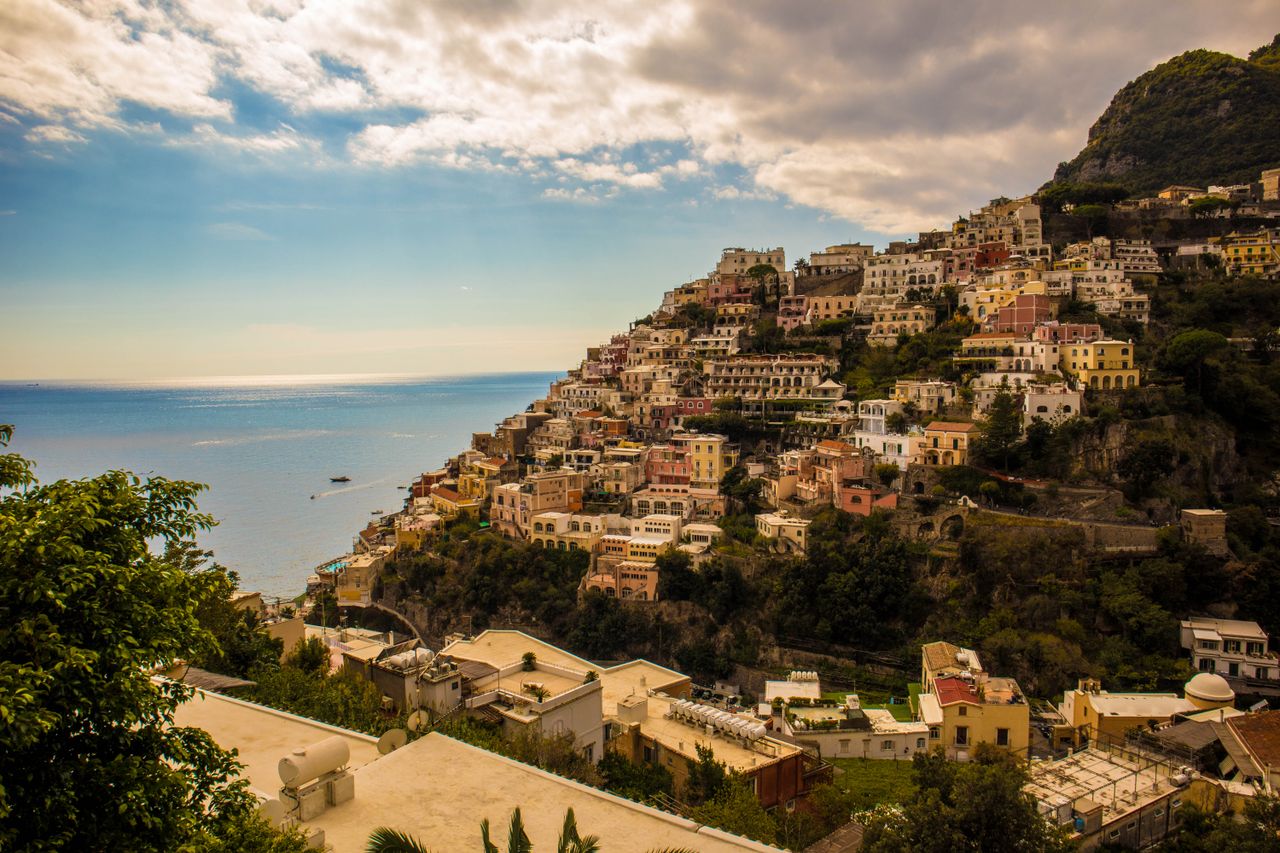
And then the descent, on foot down the fifteen hundred steps or by the little bus, into Positano itself, the town that is the reward at the bottom of the mountain. There is nowhere quite like it. The houses, painted in faded pinks and ochres and whites, are stacked so steeply down the sides of a ravine that the streets give out and become staircases, tumbling past bougainvillea and lemon trees to a small gray beach and a huddle of fishing boats. It is worth knowing, as you come down into all that beauty, that Positano was very nearly lost. In the eighteen hundreds the town fell on hard times, its old sailing trade gone, and more than half its people packed up and sailed for America, and Positano dwindled into a sleepy, half empty fishing village. What began to bring it back, oddly enough, was a piece of writing. In 1953 the novelist John Steinbeck came, fell hard for the place, and wrote an essay about it for an American magazine. "Positano bites deep," he began. "It is a dream place that isn't quite real when you are there and becomes beckoningly real after you have gone." The readers came, and never really stopped. But you will have arrived the old way, on your own two feet down the mountain, the way every traveler reached this town before there was a road, and that changes how it feels to walk into it.
The rhythm of the days
What surprises people most is how quickly the days find a shape, and how good that shape turns out to be.
It starts slow and high. You wake in Positano or Praiano with the shutters thrown open and the sea already bright, and you eat breakfast on a terrace above it, pastries and blood orange juice and coffee, in no hurry at all, because the heat of the day is the thing to walk ahead of, not into. You hand your bag to the hotel, and it vanishes toward tonight's room. Then a short ride up the switchbacks lifts you out of the heat to the cool of the plateau at Bomerano, where the walk begins, so that the whole day runs pleasantly downhill from the high, fresh start toward the sea. You step onto the path and the coast opens, and the miles go by easily, measured out not in effort but in things that make you stop: a cave, a shrine, a farmer, a view so absurd you simply have to sit on a rock and look at it for a while. The smell of the day is rosemary and hot stone and, every so often, the sudden sweetness of a lemon grove.
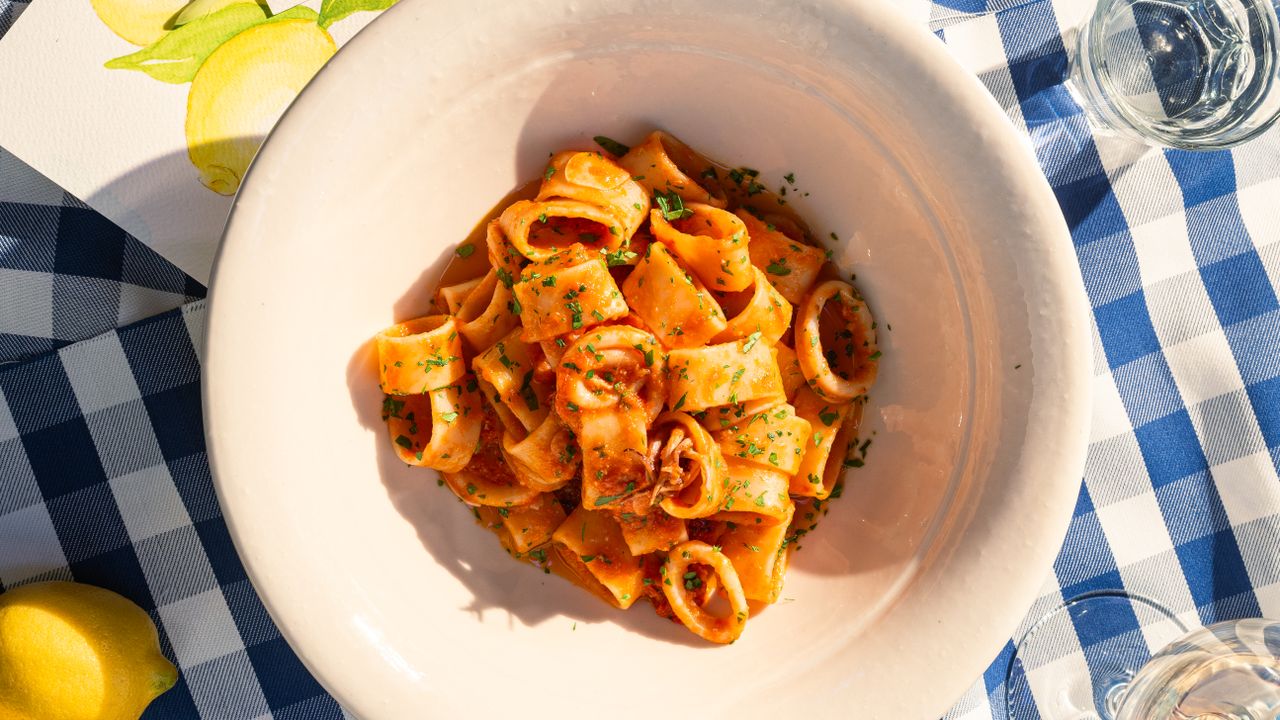
By early afternoon you are in Nocelle, and lunch is exactly what you want it to be, simple and local and eaten outdoors: a plate of pasta with the little tomatoes that grow on these slopes, a salad, a granita made from the lemons growing over your head. Then down into Positano, where your bag is already waiting in a cool room. You shower off the salt and the dust, and you go straight down to the sea for a swim, or you find a shady table for an aperitivo and watch the light go gold on the houses. Dinner is the coast on a plate: fresh anchovies, spaghetti with clams, a whole fish grilled with nothing but oil and that famous lemon, a cold white wine grown on the very terraces you walked past, and a small icy glass of limoncello to finish, made from the skins of the same fruit. You sleep with the windows open and the sound of the water coming up the ravine. And if the trip runs on, you rise and do it again, another old path, another village stacked on the sea.
When to go, and who it is for
Timing matters more on this walk than on most, because of that lack of shade and the crowds the coast draws in summer.
Spring, from about April into June, is the loveliest time of all. The hills are green, the wild broom and the rock roses are in flower, the air is soft and clear, and the walking is a pleasure from start to finish. Autumn is nearly as good and by some measures better, from September into late October, when the fierce heat has broken but the sea is still warm enough to swim, the light turns long and golden, and the biggest of the summer crowds have gone home. Those two windows are what we aim for. High summer, July and especially August, is the one stretch we gently steer people away from if we can: the path is almost entirely open to the sun, the middle of the day up there can be genuinely hard, and the whole coast is at its most crowded and its most expensive. If summer is your only time, we simply start you at dawn and have you off the ledge before the heat lands. Winter is quiet and can be beautifully clear and cheap, though some places shut and the days are short.
As for who it is for, the honest answer is most people who are steady on their feet and like the idea of earning their dinner. You do not need to be fit in any sporting sense. The walk itself is moderate. The one part that catches people out is those fifteen hundred steps down into Positano at the end, which are hard on the knees, and which we can spare you entirely with the local bus if you would rather. It makes a wonderful trip for a couple, for a few friends walking together, and it is kind and safe for the solo traveler too. Best of all, it folds beautifully into the rest of this corner of Italy. A day or two on the Path of the Gods sits naturally alongside a boat out to Capri, a morning in the ruins of Pompeii, a plate of pasta in Naples, or a slower few days moving between the coast villages on foot, so that the walk becomes the still, high heart of a much larger trip.
Why we love a walk like this
We plan a great deal of travel to the Amalfi Coast, and much of it is glorious from the comfort of a boat or a terrace or a car. And still, this walk holds a place all its own, because it gives people something the coast road and the hotel pool never quite can.
Walking restores this place to the size it was built at. For a thousand years, this was not an adventure or an attraction, it was simply how you got from one village to the next, the ordinary road of ordinary life, and to travel it on foot is to see the coast the way it saw itself for all those centuries, from above, slowly, with the sea always there and the next village always a few hours off. You feel the distances in your legs. You understand, in a way no drive can teach you, why these towns turned to the water, why the terraces climb so high, why a path along a cliff was worth the labor of cutting. And there is the plain matter of arriving. To come down off the mountain into Positano on your own two feet, sore and salty and grinning, is to enter that town the way every traveler did before 1853, having genuinely come to it rather than been dropped at its edge. People carry that home. They come back from a walk like this a little changed, a little slowed down, holding on to the particular calm of a place where, for one long day, they moved at the speed the coast was made for.
Let us plan your Path of the Gods walk
The trick of a trip like this is that it feels effortless precisely because every piece of it was arranged long before you laced up your boots. The good hotel with the sea under the window, the bag that travels around the headland while you walk over it, the ride up to the trailhead so the day runs downhill, the timing that keeps you ahead of the heat and the crowds, the bus waiting to save your knees at the end. That is the part we love most, and the part you never have to think about.
If a day high above the Amalfi Coast, walking the old road between the sky and the sea, sounds like your kind of travel, let us build it around you. We will choose the hotels in Positano or Praiano or Ravello that we think you will love, set the timing to catch the coast at its best, arrange the luggage and the transfers and a guide if you want one, and fold the walk into a larger trip through this astonishing part of Italy, out to Capri, up to Pompeii, wherever your heart is pulling. The gentle version, one perfect morning on the Path of the Gods, or the ambitious one, several days of old coast paths strung together. All you have to do is walk.
Reach out any time. We would love to help you plan a walk along this old coast that you will still be talking about long after your boots are back in the closet.