Walking the Cotswold Way: A Slow Journey Through England's Honey-Stone Villages
 Cindi Sanden
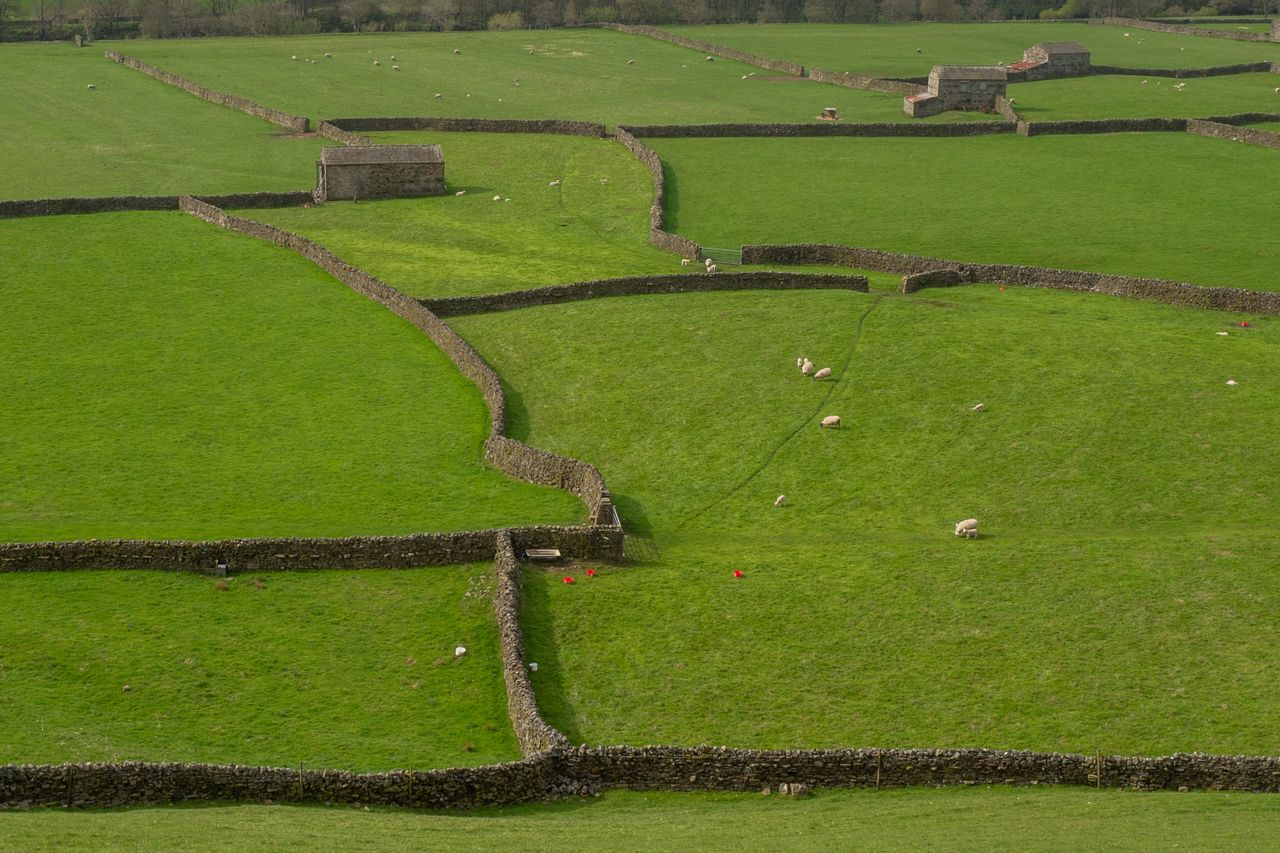
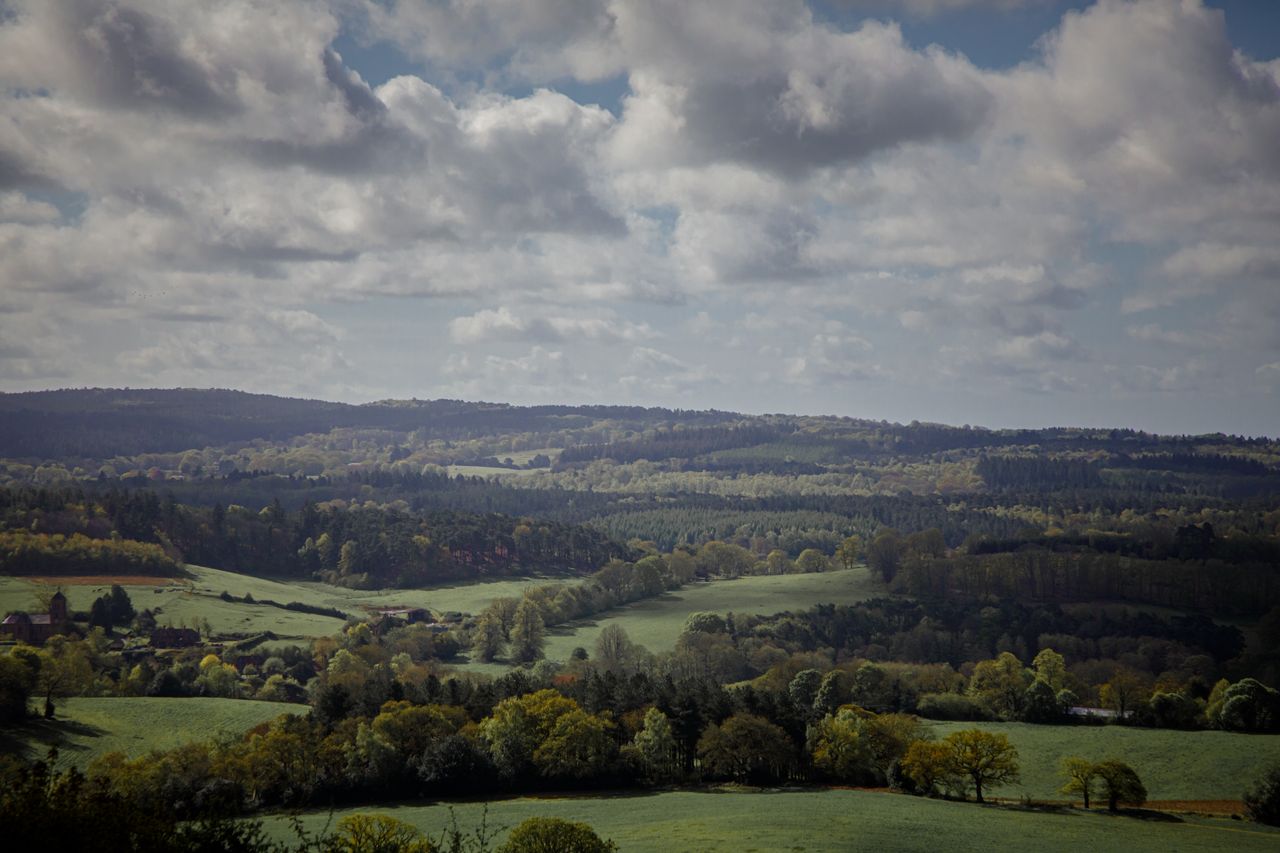
There is a moment on the first morning when you stop counting the miles and simply start walking. The path lifts you out of a village of golden stone, up onto the edge of a long green ridge, and all at once the country falls away to the west. Fields stitched together by old stone walls. A church tower off in the middle distance. The land rolling and dropping for miles until it blurs into the faint blue line of the Welsh hills. You stand there a beat longer than you meant to. Then you walk on, because there is another village waiting at the end of the day, and your bags are already there.
That is the quiet luxury of it. Your suitcase was collected after breakfast and driven ahead to tonight's inn, where it will be sitting in your room by the time you arrive. All you carry is a small pack: water, a rain jacket in case the weather turns, a sandwich wrapped in paper, and a camera you will reach for far more often than you planned. You are walking the Cotswold Way, a hundred-odd miles along the western edge of England's best-loved countryside, and you are doing it the civilized way, one village and one good dinner at a time.
Walking holidays like this have quietly become some of the most requested trips we plan, and it is not hard to see why. So we went looking, past the booking pages and the glossy brochures, to understand where this particular walk comes from, why the villages glow that unmistakable honey color, and why a week on foot through the Cotswolds has a way of resetting something in people. Here is what we found, and how to think about walking it yourself.
What walking the Cotswold Way really means
The idea is beautifully simple. Rather than settling into one hotel and driving out each day, you walk from village to village along a marked national trail, sleeping in a different inn or country pub each night. You are not hauling a heavy pack or pitching a tent. Your luggage travels ahead by car while you go light on foot, so you arrive each afternoon to find your own room waiting, a hot bath, and dinner being laid on downstairs.
The Cotswold Way runs 102 miles, from the market town of Chipping Campden in the north down to the grand Georgian city of Bath in the south. It became one of Britain's official National Trails in 2007, though walkers had been following the route for decades before that. It traces the Cotswold escarpment, the long limestone ridge that locals simply call the Edge, so for much of its length you are walking a high green rim with the vale of the River Severn spread out far below on one side and gentle farmland rolling away on the other. Most people take about a week to ten days to walk the whole thing, covering somewhere between eight and twelve miles a day. You can also walk just a stretch of it, the lovely northern third for instance, if a full week is more than you have in mind.
A word of honesty about the terrain, because we would rather you knew going in. This is not a flat stroll. The path spends its days climbing up onto the ridge and dropping back into the valleys, and those short climbs add up over a day. But there is nothing technical about any of it, no scrambling and no real exposure, and the reward for every climb is another long view. If you can comfortably walk a few miles over hills at home, you can walk the Cotswold Way. And you can do it guided, with someone handling every booking and every turn, or self-guided, following a set of maps and notes at your own pace with the inns and the luggage transfers all arranged in advance. Either way, the day belongs to you.
The hills that wool built
To understand why the Cotswolds look the way they do, you have to go back to the sheep.
After the Norman conquest of 1066, landowners worked out that these high, grassy hills were close to perfect for raising sheep, and they built enormous flocks on them. The local breed grew so large and so heavily fleeced that people took to calling them the Cotswold Lions. Their wool was long, soft, and prized all across Europe, and by the Middle Ages it was some of the most valuable in the world. Merchants in Italy and Flanders competed to buy it. For a few centuries this quiet corner of England was, improbably, one of the wealthiest rural places on the continent, and all of it rested on the backs of sheep.
The merchants who grew rich did two things with the money, and both are why the walk is so beautiful today. They built themselves handsome houses out of the local stone, and then, worried for their souls, they poured fortunes into their parish churches. The result is a run of enormous, light-filled churches in villages far too small to need them, so grand and so out of proportion that they earned their own name: the wool churches. You will pass several of the finest, at Chipping Campden and Winchcombe among them, their towers standing up over the rooftops for miles around. They are monuments to medieval money and medieval worry in equal measure, and they are magnificent.
Then there is the stone itself, the thing that ties the whole region together. It is a golden limestone, laid down when this land sat beneath a warm Jurassic sea, soft enough to carve and warm enough in color to make a whole village feel lit from within. The shade shifts as you walk south, from deep honey in the north around Chipping Campden, to a rich gold through the middle of the hills, paling to a soft cream by the time you reach Bath. Because every cottage, wall, barn, and church for a hundred miles is built from the same rock, the villages look as though they grew straight up out of the fields. Which, in a way, they did.
The villages you will walk through
The walk is really a string of villages, each one a reason to stop, and this is where a good day on the trail turns into a story you tell for years afterward.
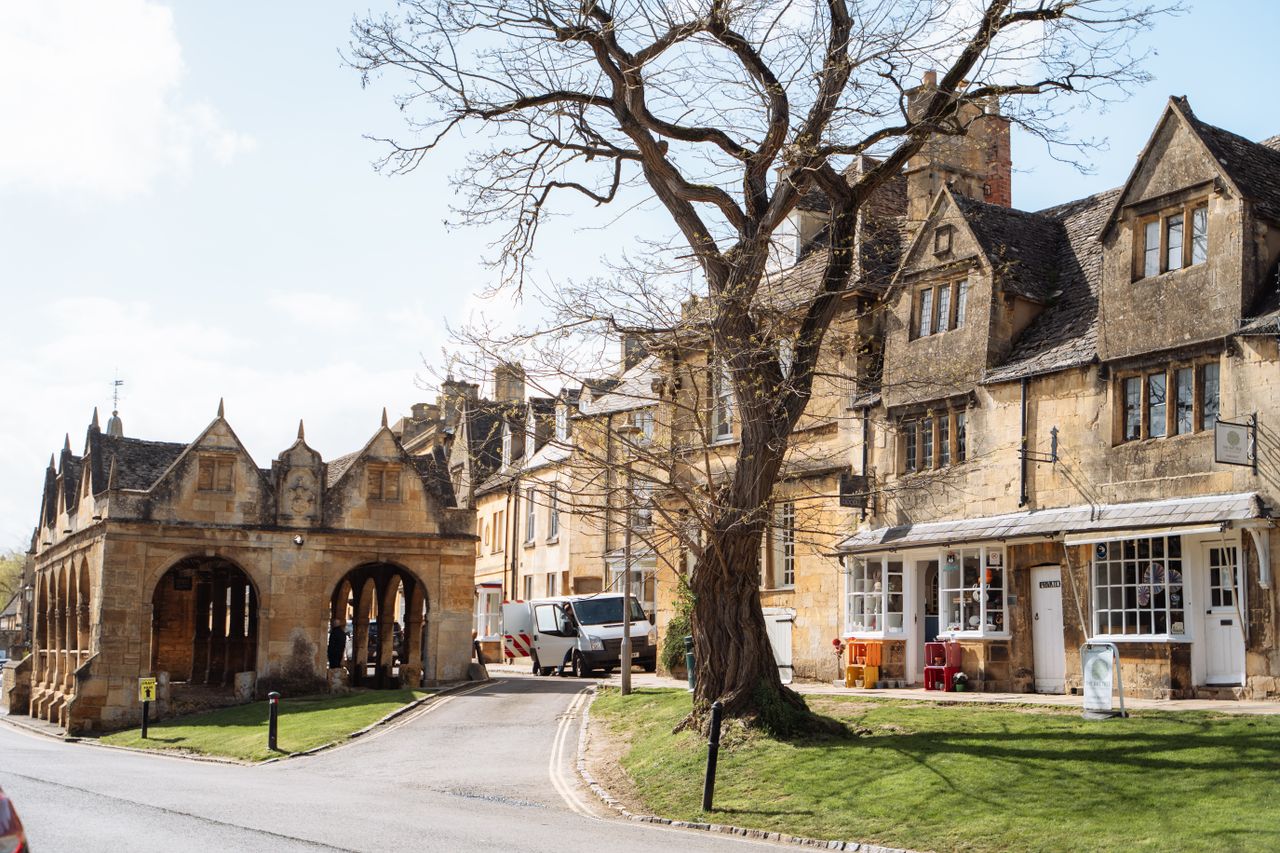
Chipping Campden is where it all begins, and it may be the most complete wool town of them all. Its long High Street is a slow curve of golden stone houses that has barely changed in four hundred years. At the center of it stands the Market Hall, built in 1627 to shelter the sellers of butter, cheese, and poultry, its stone arches worn smooth by four centuries of market mornings. The word "chipping," which you will see turning up all over these hills, is simply the old English word for market. This was a town that lived and breathed trade.
Broadway comes next, wide and elegant, its main street lined with chestnut trees and antique shops and honey-stone inns that have been putting up travelers for hundreds of years. High on the hill above it stands Broadway Tower, a folly finished in 1798, a little mock castle set on one of the highest points in the whole region. The designer William Morris loved it and used it as a country retreat. On a clear day, they say, you can see as many as sixteen counties from the top, and after the climb up to it you will feel you have earned the view.
Between the bigger towns lie the small perfect places that people fall in love with. Stanton and Stanway are two of them, tiny villages of thatched roofs and gabled stone so unspoiled they can feel staged, though they are entirely real, still lived in, still quiet. This is the Cotswolds people picture before they ever arrive, and walking into them on foot, with not a car park in sight, is its own particular kind of magic.
Winchcombe is a proper little town with an outsized history. Just outside it sits Sudeley Castle, where Katherine Parr, the last of Henry VIII's six wives, lived out her final year and lies buried in the chapel. And on the hills above the town is Belas Knap, a Neolithic burial mound nearly six thousand years old, its stone chambers raised by people who worked these same slopes long before the Romans, long before the sheep. The trail takes you right past it. Few walks hand you that kind of deep time so casually.
Painswick, near the southern end, is known as the Queen of the Cotswolds, a steep and silvery little town of narrow lanes. Its churchyard is famous for two things: a crowd of ancient yew trees clipped into dark domes, and a stubborn local legend that only ninety-nine of them will ever grow, because the Devil kills off the hundredth. They planted a hundredth for the millennium anyway. So far, it has held.
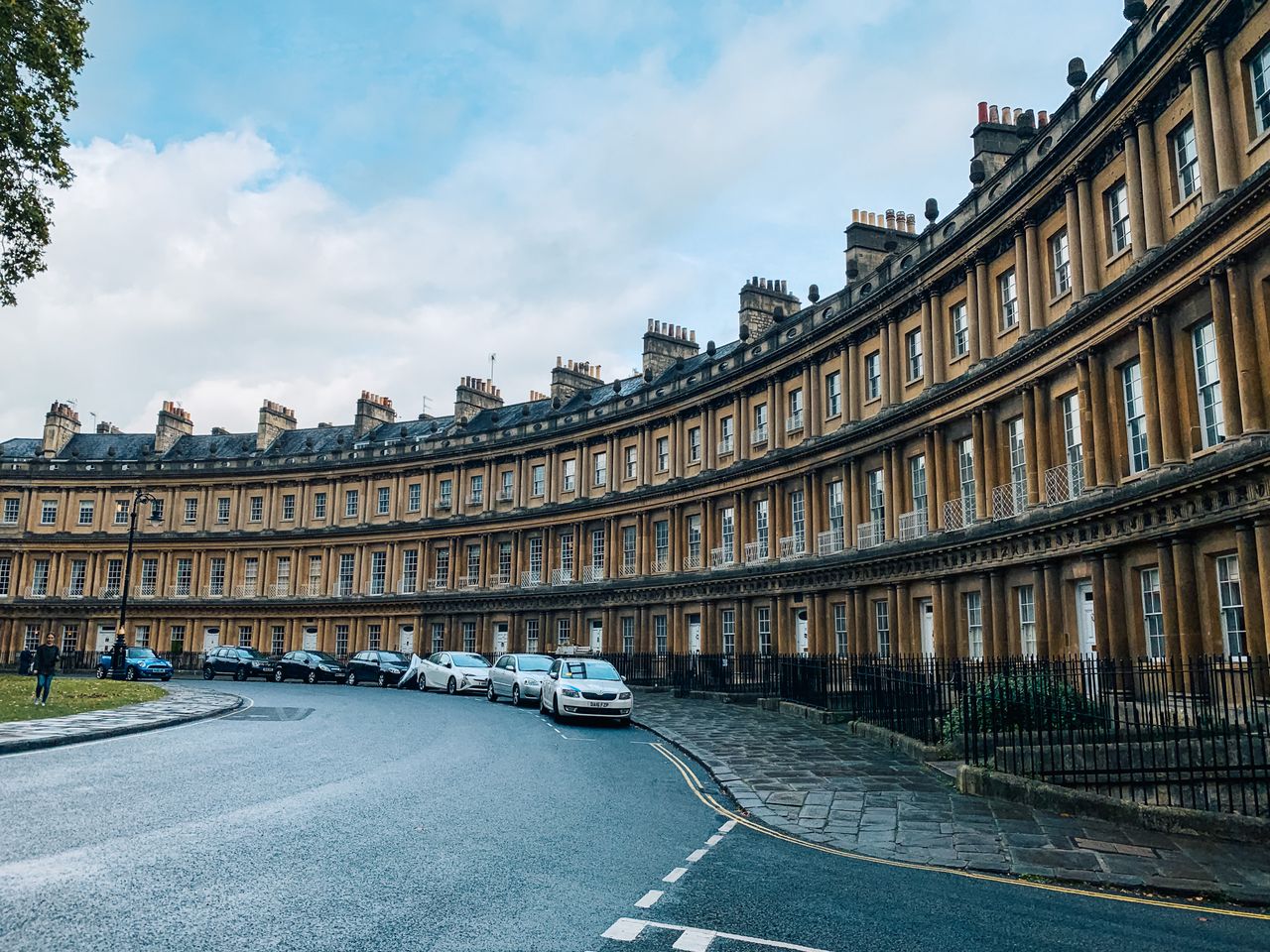
And then, at the very end, the land drops for the last time and you walk down into Bath. After a week of villages it feels like stepping into another world entirely: a whole city built of that same pale golden stone, but on a grand and theatrical scale. Roman baths still steaming at its heart, a soaring medieval abbey, and sweeping Georgian crescents curved like something out of a novel, which they often were. It is one of the loveliest cities in Europe, and arriving there on foot, having walked every mile from Chipping Campden to get there, is a finish that stays with you.
The rhythm of the days
What surprises most people is how quickly the days settle into a shape.
It starts with a proper English breakfast, the full spread, eggs and bacon and grilled tomatoes and toast and a pot of strong tea or coffee, the kind of meal built for a person who is about to walk all day. The innkeeper points out the turns on your map, mentions which pub along the way does a good lunch, and sends you off with a read on the weather. You step outside, shoulder your small pack, and pick the trail back up where it slips out of the village and climbs onto the ridge.
Then you walk. The miles pass more easily than you would think, broken up by all the things that make you stop: a view opening across the vale, a churchyard worth a wander, a field of those famous long-fleeced sheep who lift their heads to watch you go by. Lunch is often a village pub, a plate of something warm and a half-pint by the fire or out in the garden, or else bread and cheese on a bench with a hundred miles of England laid out in front of you. There is no clock but your own. If a place asks you to linger, you linger.
By late afternoon you come down off the hills into the next village, and this is the part that makes the whole thing worth it. Your bags are already upstairs. Someone pours you a drink. You soak the walk out of your legs in a hot bath, then come down to dinner in a low-beamed room, often food grown or raised within a few miles of the table, and you eat the way only someone who has walked twelve miles can eat. You sleep like a stone. And in the morning you get up and do it again, one village further south, the stone growing a shade paler as you go.
When to go, and who it is for
Late spring and early summer are the glory season here, roughly May into July, when the hedgerows are thick with cow parsley and hawthorn, the fields run through a hundred shades of green, and the evenings stretch on and on. September and early October are lovely too, softer and quieter, the harvest in and the light turning gold. High summer is beautiful but busier, and the depths of winter bring short days and deep mud, so most walkers aim for the shoulders of the year and are well rewarded for it.
As for who it suits, the honest answer is most people who like to walk. You do not need to be an athlete, but you should be steady on your feet over hills, because the climbs are real even when they are short. It makes a wonderful trip for a couple who want time to talk and nowhere in particular to be, for a few friends walking it together, or for a solo traveler who likes knowing there is a warm inn and a hot dinner waiting at the end of every day. And it is made for the kind of traveler, and we suspect you may be one, who would rather feel a country underfoot than watch it slide past a coach window.
Why we love a trip like this
We plan a great deal of travel, some of it about as grand as travel gets. And still, a walking trip like this one holds a particular place in our hearts, because it gives people something the big glittering itineraries sometimes cannot.
Walking changes the way you meet a place. You notice the smell of rain coming, and cut grass, and woodsmoke. You notice the way the stone warms in the late light, and the easy talk of the people who pour your pint and cook your dinner and have lived in these hills their whole lives. You arrive somewhere having earned the arriving. And because you spend your nights and your money in family-run inns and village pubs rather than a chain hotel off a motorway, your trip quietly helps keep these small places going. It is a generous way to travel, and it is good for the traveler in ways that are hard to put a number on.
It is also, without making too much of it, a real reset. A week with nothing to solve beyond the walk to the next village has a way of clearing the head that no beach chair ever quite manages. People come home from these trips lighter, and not only because of the miles.
Let us plan your Cotswold walk
The great trick of a trip like this is that it looks effortless, and it feels effortless, precisely because every piece of it was handled long before you ever laced up your boots. That is the part we love most.
If a week on the old paths of England sounds like your kind of travel, let us build it around you. We will match the route and the daily distances to your fitness and your pace, choose the inns and pubs we think you will love, arrange the luggage transfers and the reservations and all the small logistics that turn a long walk into a proper holiday, and time it for the season you are after. Guided or on your own, gentle or ambitious, a few days or the whole hundred miles. All you have to do is walk.
Reach out any time. We would love to help you plan a Cotswold walking journey you will still be talking about long after your boots are back in the closet.