South of France by Canal Boat: Drive Your Own Boat on the Canal du Midi
 Cindi Sanden
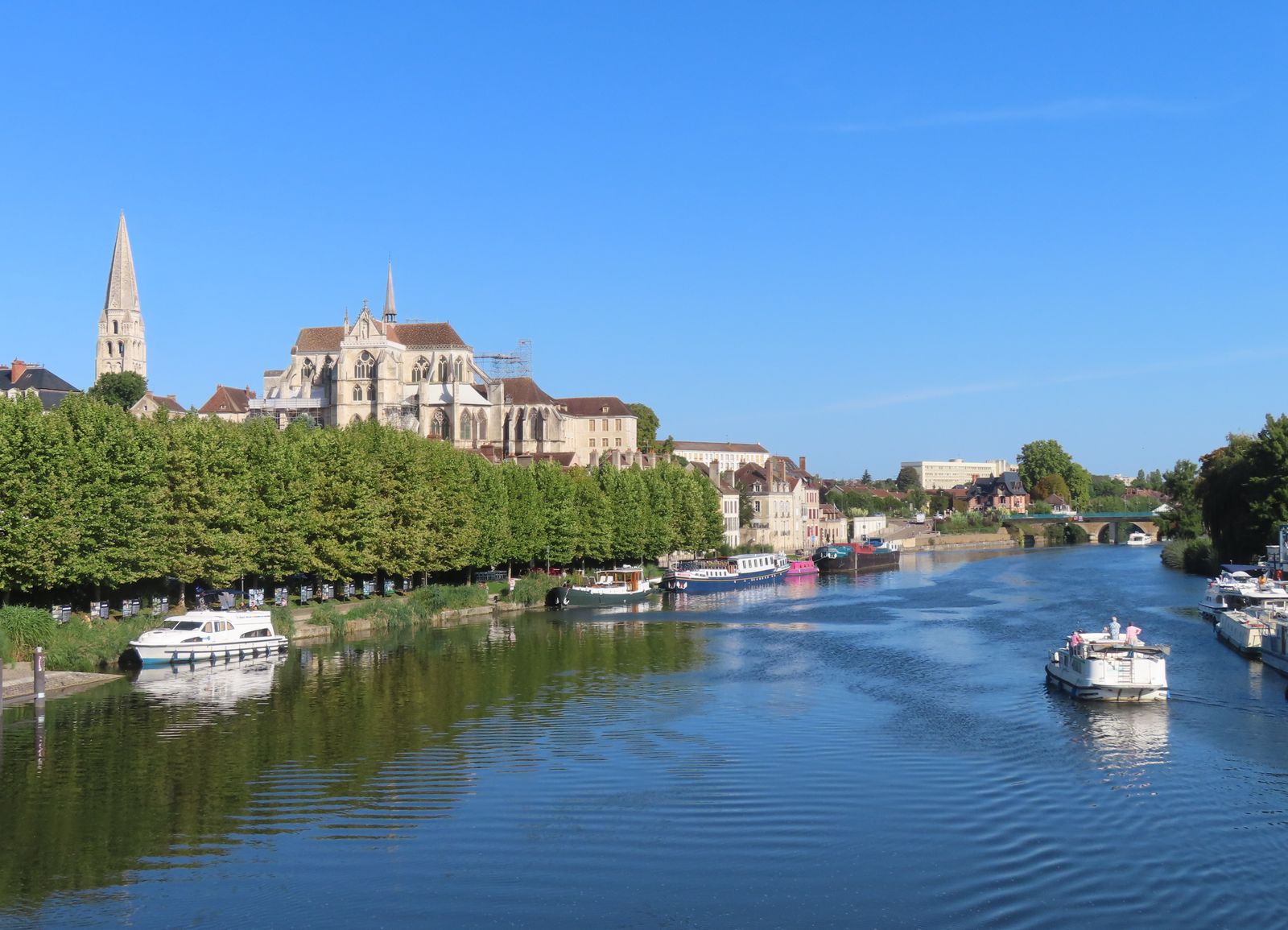
If you have seen the big cities in France and want something slower, this is one of my favorite trip ideas to suggest. You rent a boat, you drive it yourself, and you spend a week moving at walking pace along a 17th-century canal in the south of France, stopping in a different village every afternoon.
You don't need a boating license. The rental company shows you how to drive the boat and work the locks before you leave the dock. The speed limit on the canal is about 5 miles an hour, so nothing happens fast. After that it is just you, the canal, the vineyards and a lot of shade trees.
What the Canal du Midi is
The Canal du Midi runs about 150 miles across the south of France, from Toulouse toward the Mediterranean. Pierre-Paul Riquet designed it, construction started in the 1660s, and it opened in 1681. It is a UNESCO World Heritage Site today. It was built so boats could carry wine and goods across France instead of sailing all the way around Spain. Now almost all the traffic is people on vacation.
One fun fact for American travelers: Thomas Jefferson traveled the canal in 1787, while he was the American minister to France. He put his carriage on a boat, walked the towpath for much of the way, and wrote to a friend that of all the ways of traveling he had tried, this was the pleasantest. His letter is here if you like that kind of thing. I do.
What a week on the boat looks like
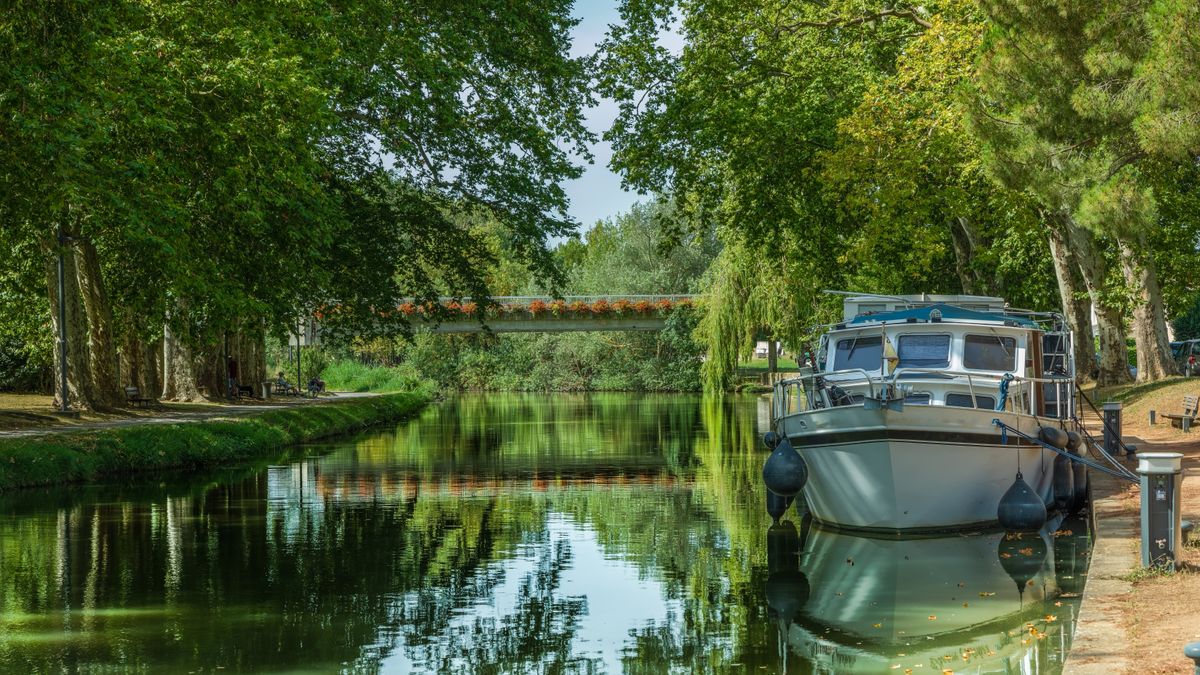
The boats are like a small RV on the water. Most have a kitchen, a fridge, one or more cabins with their own bathroom, and an upper deck where whoever is driving sits. Some have air conditioning, which matters in July and August.
A typical day goes something like this. Coffee on the deck, an hour or two of cruising, a few locks, lunch at a restaurant on the water, then you tie up in the next village for the afternoon. You can bike into town for groceries, visit a wine estate or an old church, and have dinner on board or in town.
The boats are slow. People on bikes will pass you on the towpath. That is the whole point. You are not trying to get anywhere fast.
The locks are the adventure
On most boat trips the weather is what you watch. On the canal it is the locks. Lock keepers run most of them, and your job is to steer in, get your ropes on, and keep the boat steady while the water rises or drops. The first few feel clumsy. By the end of the week you have a system.
A few things to know:
- Many locks close for lunch, so plan your morning around getting through before the break.
- Some bridges are low and narrow. Whoever is on the upper deck needs to duck.
- Busy locks in summer can mean a wait, so leave some slack in your day.
Picking your stretch of the canal
You won't cover the whole canal in a week, and you shouldn't try. Most people pick one section and go one way, or go out and come back to the same base. Shorter trips of a few nights work too. Each part of the canal has its own feel.
The west end, around Castelnaudary and Carcassonne. There are plenty of locks on this stretch, so it suits people who like to stay busy. Castelnaudary sits on a big basin and calls itself the home of cassoulet, so plan at least one long lunch. Near there is the canal's highest point, where an obelisk honors Riquet and the water starts flowing toward the Mediterranean instead of the Atlantic. Carcassonne is the big sight: the medieval walled city on the hill is a walk or a short taxi ride from the canal.
The long level stretch through the wine country. East of Carcassonne the canal winds through the Minervois vineyards, and then comes a stretch of about 34 miles with no locks at all. This is the relaxed option. You get long, easy hours on the water and more time to sit on the deck. Along the way:
- Le Somail, a tiny hamlet with a stone humpback bridge and a grocery shop on a barge.
- Capestang, with a huge Gothic church that was never finished.
- The Malpas Tunnel, the first tunnel ever dug for a canal. It is narrow and dark for a few minutes, and then you are out the other side.
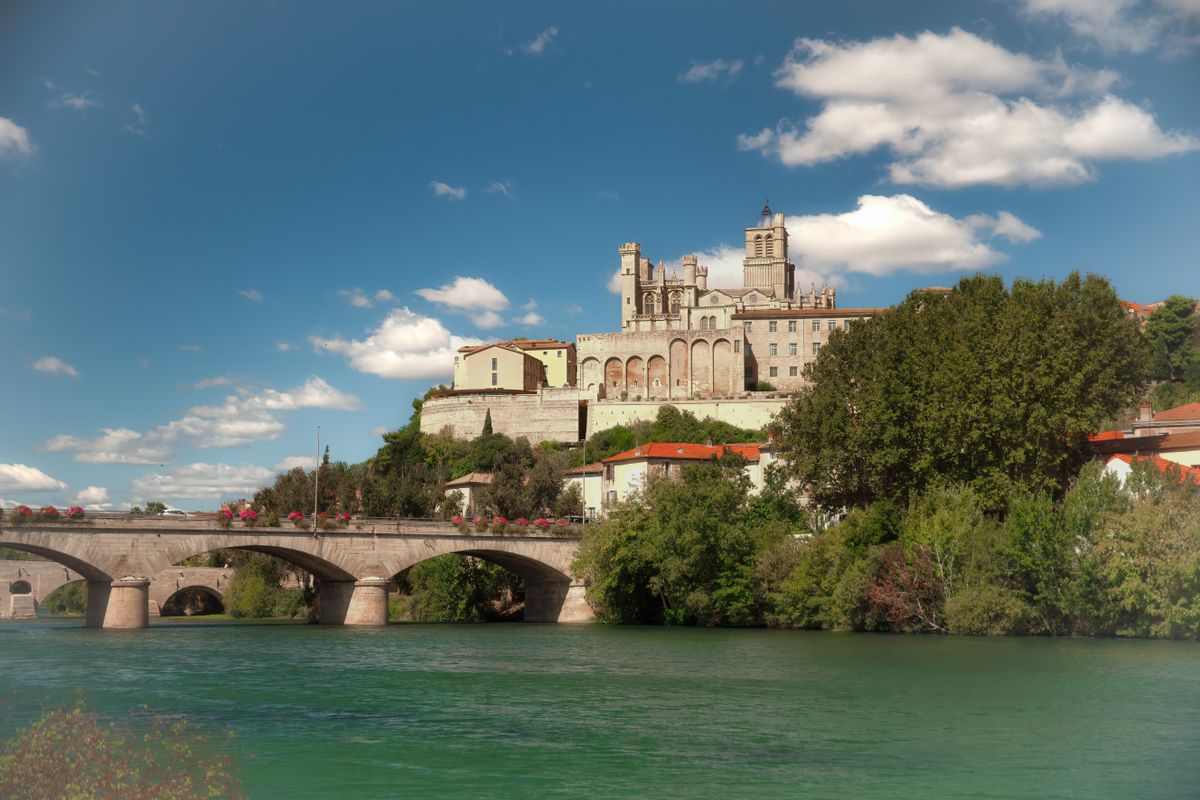
Béziers and the run to the sea. At Béziers the canal drops down the Fonserannes locks, known as the Nine Locks, a staircase of oval lock chambers that steps boats about 70 feet down the hill in one go. They run at set times, so you line up early. Right after, you cross the Orb Aqueduct, where the canal rides over a river on a stone bridge, with Béziers Cathedral up on the hill across the water. Farther east, Agde has a round lock with three exits, and the canal ends at the Étang de Thau, a big saltwater lagoon known for its oysters.
Who this trip is for, and who it isn't for
It is a good fit if:
- You have seen Paris and want small-town France instead.
- You like to cook a few meals and eat out for others.
- You are fine with some physical work, like stepping on and off the boat and handling ropes at the locks.
- You are traveling as two couples, a family, or a group of friends. Bigger boats sleep more people.
It is not a good fit if you want someone else to handle everything. You are the captain, the deckhand and the cook. That is a big part of the fun, but it is still work. If that sounds like too much, keep reading.
The easier option: a hotel barge
If you love the idea of the canal but not the idea of driving, look at a hotel barge. A small group of guests travels with a crew, usually a captain, a chef and a guide. Meals are cooked on board, and a van takes you out to villages, markets and wineries. You still go through the same locks and villages. You just get to sit on the deck while someone else handles the ropes. I wrote a whole post on hotel barge cruises in France if you want to see how they work.
If you would rather be on a ship, a river cruise through Provence on the Rhône or through Normandy on the Seine has some of the same feel, with more people and no driving. My river cruising guide explains how those work.
Not just the Canal du Midi
Once you have done one week on a French canal, you may want another. You can rent the same kind of boat in other parts of France too, including Burgundy, Alsace, Brittany and the Camargue. Each one has its own food, wine and pace, and I am happy to help you compare them.
A few practical notes
- When to go: Boats run roughly April through October. Spring and early fall are my pick. July and August are hot and busy.
- Getting there: Fly into Toulouse or Montpellier, or take the fast train from Paris to the south, then a short transfer to the boat.
- One-way or round trip: A one-way week lets you see more, but you need a plan for getting back to your car or the train at the end. I sort that out as part of planning.
- Sundays: Shops in small villages close early or all day on Sundays, so stock up on Saturday.
- Bikes: Bring or rent bikes for the boat. Grocery runs and village visits go much faster on two wheels.
- Overnight stops: Village ports charge a small fee for a night with water and power, and in many places you can also tie up along the bank.
Ready to start?
If a slow week on a French canal sounds like your kind of trip, tell me about your trip. I will help you decide between driving your own boat and a hotel barge, pick the stretch of canal and the time of year, and plan the days before and after. Let me know who is coming and when you are thinking of going.
Talk soon, Cindi