Walking the Nakasendo: A Slow Journey Through Japan's Old Post Towns
 Cindi Sanden
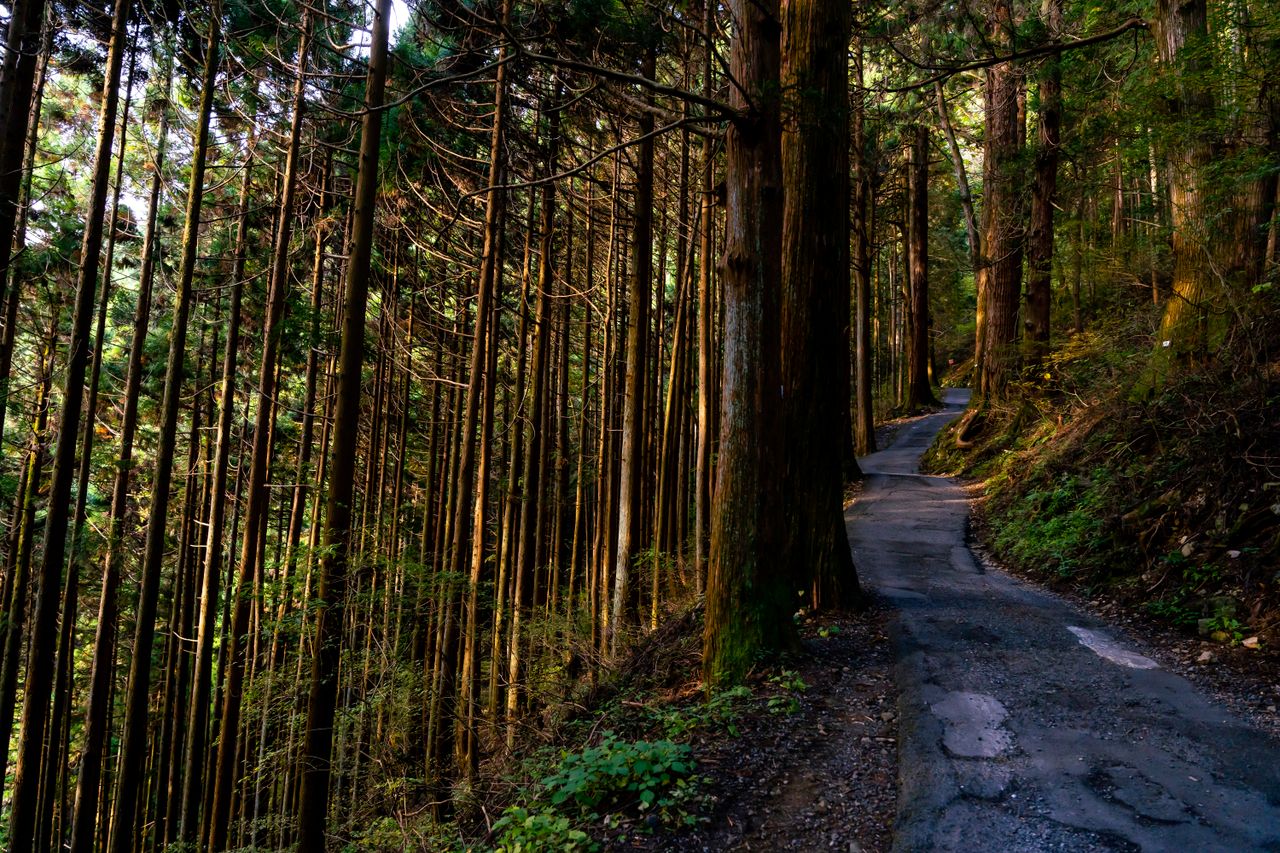
The stone steps climb into the cedars behind the last house in the village, and you climb with them. It is early, and the mountain air still holds the cool of the night. The paving underfoot is old, worn smooth and slick in the shade, laid down for travelers who came this way on foot centuries before you. A little farther on you pass a bell on a post with a sign asking you to ring it, one of many along the path, a gentle way of letting the bears know a person is coming, and you give it a swing and listen to the sound roll off into the trees. Somewhere below, a stream. Above you, nothing but the tall straight trunks of Japanese cypress and the green light coming down through them. The pass is up ahead. Kyoto, in a manner of speaking, is four hundred years and a few hundred miles beyond it.
Your bag is already gone. Someone collected it from the inn after breakfast and is driving it over the mountain to tonight's town, where it will be waiting for you by mid afternoon, folded neatly in a room with tatami on the floor and a valley out the window. All you carry is a small pack: water, a rain layer because these mountains make their own weather, and a few coins for the tea house at the top, where a fire has been kept burning for three hundred years and a cup is still free to any walker who climbs that far.
This is the Nakasendo, one of the great highways of old Japan, and you are walking the loveliest surviving stretch of it the civilized way. Not shouldering a heavy pack or racing a clock, but strolling from one perfectly preserved post town to the next, resting each night in a traditional inn, eating food you will think about for years, and letting someone else move the luggage over the hills. More of our travelers have been asking us about Japan lately, and about walking it rather than just riding the trains, so we went past the tour brochures and the booking sites to understand where this road really comes from, why two little mountain towns on it look exactly as they did in the age of the samurai, and how to walk it yourself without giving up a single comfort. Here is what we found.
What walking the Nakasendo really means
The Nakasendo was one of five great roads the Tokugawa shoguns built to hold their country together. Its name means something like the central mountain route, and that is exactly what it was: the inland highway between the two capitals, running from Edo, the city we now call Tokyo, all the way to Kyoto, but taking the high, hard way through the mountains rather than the easy coast. It was more than three hundred miles long and strung with sixty nine post stations, official towns spaced a day's walk apart where travelers could find a bed, a meal, a fresh horse, and a porter to carry the load to the next stop.
Most of that old road has been swallowed by modern Japan, paved into highways or buried under the bullet train. But one stretch survives almost whole, and it is the reason people fly across the world to walk here. In the Kiso Valley, a deep green trough of river and forest in the mountains of central Japan, two of those sixty nine post towns, Magome and Tsumago, have been kept or brought back so completely that walking between them feels less like sightseeing than like stepping bodily into the year 1840. The path that links them is the genuine article, the actual Nakasendo, about five miles of stone steps and forest track and quiet country lane, and you can walk it in a gentle half day.
The walking is easy to moderate, not a feat. From Magome the trail climbs for a while to a low pass, then spends the rest of the way coming gently down to Tsumago, which is why we almost always send people in that direction, more downhill, less puff. Two and a half to three unhurried hours does it, with time to stop. If you want more, and many people do once they get the taste for it, the old road runs on through other preserved towns to the north, and a good trip can be built to string several days of walking together, each one ending in a different old station town.
And you can do all of it in comfort, which is the whole point of how we plan it. Your nights are spent in traditional inns, some of them wooden buildings two and three centuries old, with meals cooked by the family and a deep hot bath to sink into at the end of the day. Your bag rides over the hills without you. You can walk guided, with someone arranging every night and meeting you along the way, or self guided, following a route so well marked, in English as well as Japanese, that you truly cannot get lost, with all the beds and the luggage and the train tickets sorted in advance. Either way, the walking hours are yours alone.
A road from the age of the samurai
To understand why this particular walk gets under people's skin, you have to know what these roads were for, and it was not tourism.
When the Tokugawa clan won control of Japan around the year 1600 and settled in to rule for the next two and a half centuries, they faced the oldest problem of any conqueror: how to keep a few hundred proud regional lords from raising armies and pulling the country back into war. Their answer was a system called sankin kotai, alternate attendance, and it was quietly brilliant. Every feudal lord in Japan was ordered to keep a grand household in the shogun's city of Edo, to live there himself every other year, and to leave his wife and children behind in the city, as polite hostages, whenever he returned home to his own domain. That meant that at any given moment, half the nobility of Japan was on the road, traveling to the capital or back, and the great highways like the Nakasendo were built and maintained to carry them.
They did not travel light. A powerful lord moved with a procession that could run to hundreds or even thousands of people, samurai and porters and grooms and standard bearers, spears and lacquered chests and palanquins, winding for a mile along the mountain road. Commoners were expected to kneel by the roadside and lower their eyes as it passed. In every post town, the finest house was the honjin, the official inn kept ready for these lords and for imperial messengers, with a second one called the waki honjin held in reserve in case two great parties arrived at once. Ordinary travelers, and there were plenty of them, merchants and pilgrims and sightseers, stayed in the humbler inns called hatago that lined the street, and read the shogun's latest laws off a public notice board planted at the edge of town. When you walk into Tsumago today and stand in front of the honjin and the waki honjin, you are looking at exactly this world, the inn for the lord and the inn for everyone else, still standing a few doors apart.
The Nakasendo had one great advantage over its rival, the coastal Tokaido, and it explains a lot about the towns you walk through. The coast road was faster and busier, but it was cut by wide rivers that had no bridges, only ferrymen, and when the rivers flooded, whole processions could sit stranded for days. The mountain road had no such ferries. It was longer and steeper, but it was reliable, and so it drew a particular kind of traveler, including, most famously, a princess. In 1861, in a desperate bid to bind the old imperial court to the failing shogunate, the emperor's young sister Kazunomiya was sent to Edo to marry the shogun, and she came the whole way along the Nakasendo. Her wedding procession was so vast that it reportedly took four full days to file past a single point on the road. The people of these mountain towns turned out to watch history walk by their doors.
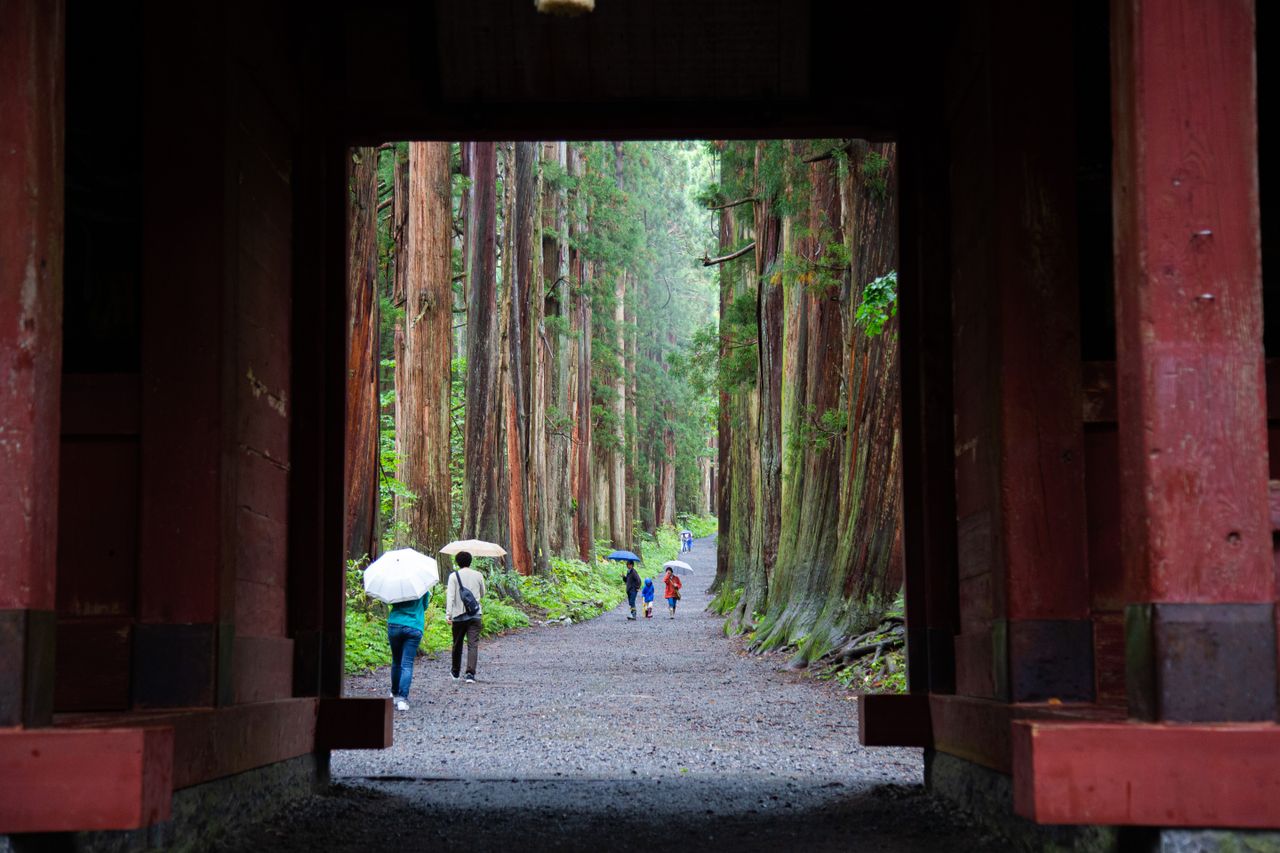
There is a reason those forests around you are so magnificent, too, and it is a dark little story. The Kiso Valley grows some of the finest timber in Japan, above all the fragrant, straight grained cypress called hinoki, so prized that it was used to build the holiest shrines in the land. By the late 1600s the lords who governed the valley had cut so much of it that they panicked about running out, and they clamped down with a law of famous cruelty. Five kinds of tree were placed off limits to ordinary people entirely, and the penalty for felling a protected trunk was death. The saying that came down from that time, one tree, one head, was not a metaphor. It was policy, and horrible as it was, it is the reason these hillsides are still cloaked in ancient forest for you to walk through today.
And then there is the quieter miracle of why the towns themselves survived, because by rights they should not have. When Japan modernized and the railway came through the valley in the early twentieth century, it bypassed the old post towns, and the traffic that had fed them for centuries simply stopped. They emptied out. They began to rot and fall down. What saved Tsumago was not the government but its own people. In 1968, with their town dying around them, the residents formed an association to love and protect it, as they put it, and bound themselves to a charter of three plain promises about their own homes and shops: they would not sell, would not rent, and would not destroy. They repaired the old houses by hand instead of replacing them. They agreed to hide the power lines and keep the cars off the main street during the day. It was one of the first grassroots preservation efforts of its kind anywhere in Japan, and it worked so well that the whole town was made a protected historic district in 1976, a model that Magome and other towns then followed. The reason you can walk into a street with no wires, no cars, and no century between you and the samurai is that a few hundred ordinary people decided, more than fifty years ago, not to let it go.
The post towns you walk through
The walk is really a story with three chapters, an old town at each end and the mountain in between, and each one gives you something different.
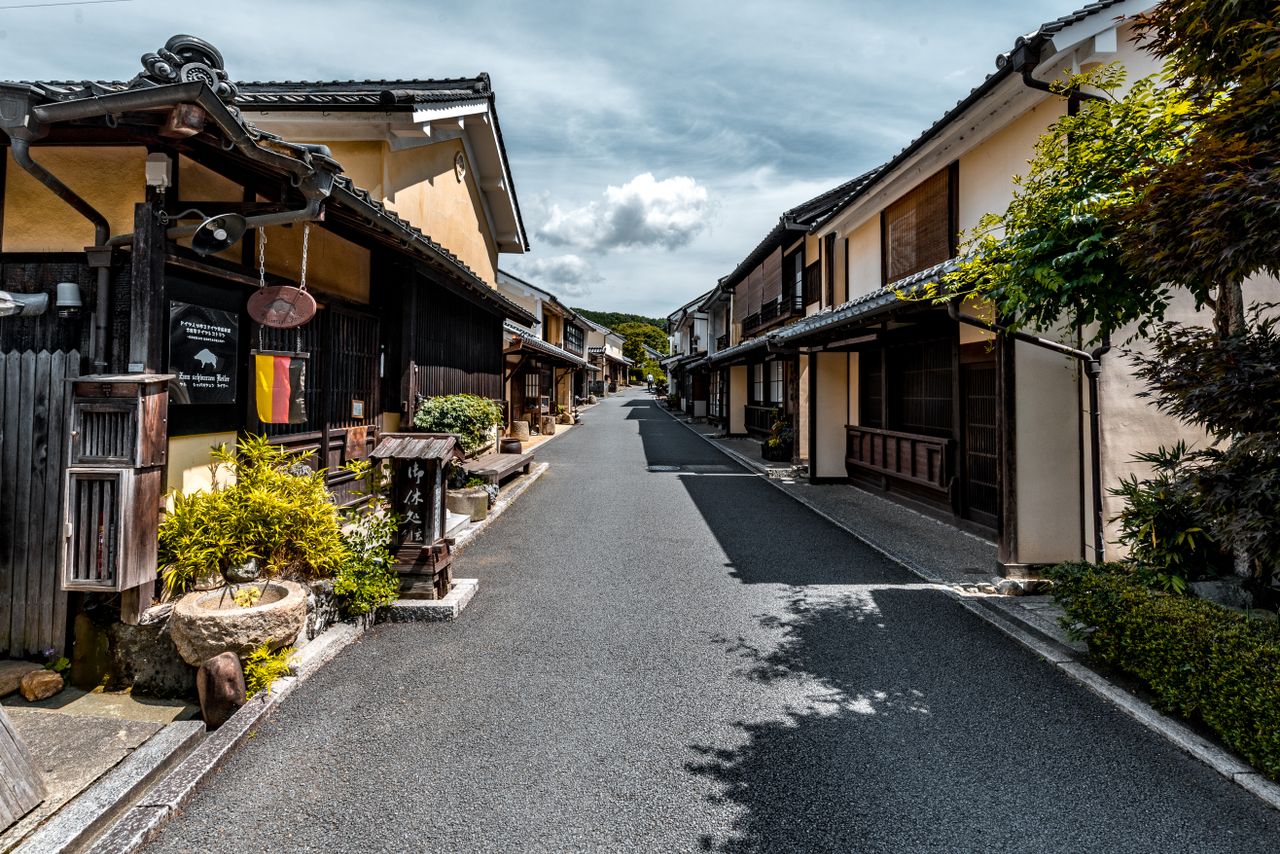
Magome is where most people begin, and it makes a grand first impression. Unlike the flat towns, Magome is built straight up a hillside, so its single street is a steep stone paved ramp lined the whole way with dark wooden houses, tea shops, and little stores selling roasted rice cakes and cups of chestnut ice cream. A great wooden water wheel turns at the bottom. On a clear morning you can look back over the tiled roofs and see the cone of a mountain called Ena floating above the valley. Magome was also the birthplace, in 1872, of one of Japan's most beloved novelists, Shimazaki Toson, and his epic novel of these mountains and the fall of the old order, Before the Dawn, opens with a line every Japanese schoolchild knows: the Kiso road lies entirely in the mountains. His family kept the honjin here, and the museum on its site is worth a half hour before you climb out of town.
Then comes the mountain, and this is the best part. The stone street gives way to a footpath, and the path climbs through farm plots and stands of bamboo up into the deep cedar and cypress forest to the Magome Pass, the high point of the day at around two thousand six hundred feet. Not far beyond it, a short detour drops you at a pair of waterfalls the locals call the male and female falls, tumbling side by side through the mossy rock. And a little past that stands the thing people remember longest: a real thatched tea house, some three hundred years old, its floor built around a sunken hearth where a fire is genuinely kept burning, tended by volunteers from the valley who will wave you in out of the weather and pour you a cup of hot tea for nothing at all. You sit on the worn wood with the smoke in your eyes and the woods dripping outside, and the centuries fold up very small.
Tsumago, at the bottom of the long descent, is the reward and the crown of the walk. This is the town those residents saved in 1968, and it is the most complete Edo period street in Japan. There are no visible power lines and no cars in the daytime, only a long gentle curve of dark timber inns and shops with deep eaves and slatted fronts, lanterns and cloth signs, exactly as it was when the lords' processions came through. You can step inside the honjin, rebuilt as it stood, and the original waki honjin next door, a genuine survivor now protected as an important cultural property, and see how a great house of that time was actually laid out, the raised tatami rooms for the nobility, the vast dark kitchens, the smoke stained beams. If you have the legs for it, the true Nakasendo keeps going from here toward the town of Nagiso and, farther north, to other preserved stations like Narai with its own famous street, which is how a single afternoon's walk can grow into the backbone of a whole week in Japan.
The rhythm of the days
What surprises people most is how quickly the days find a shape, and how deeply satisfying that shape turns out to be.
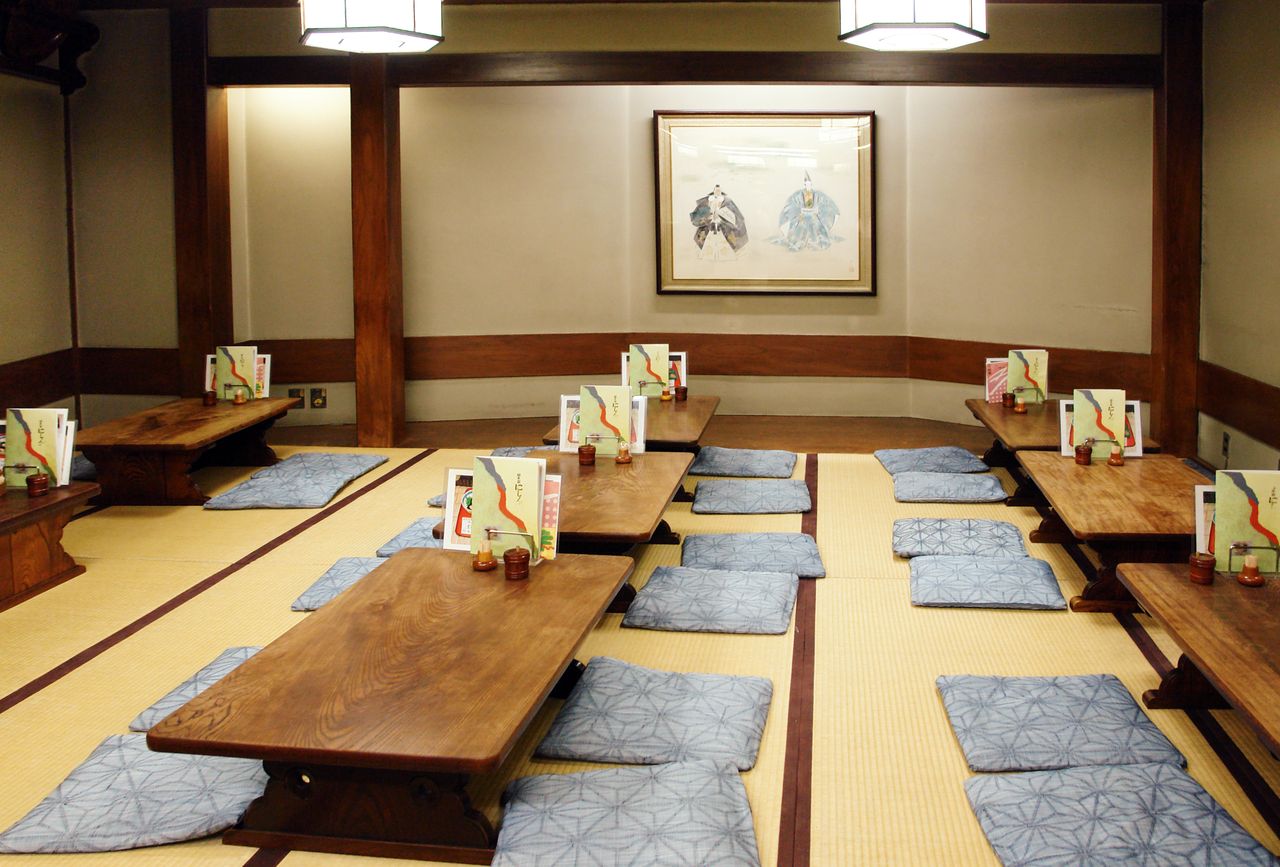
It begins in the inn, on the floor. You sleep on a futon laid out over tatami, in a room warmed by a bath you took the night before, and you wake to a breakfast that is a small work of art, grilled river fish and rice and miso soup and a dozen little dishes in a dozen little bowls. You hand your bag to the innkeeper, who sends it over the hill, and you step out into the cool with nothing on your back. Then you walk, and the miles pass easily, broken up by all the small things that make you stop: a bell to ring, a wayside shrine no bigger than a bird house, a farmer bent in a terraced field, a stand of cypress so tall you tip your head all the way back. You will pass other walkers and trade a bow and a word, and you will ring the tea house bell at the pass and sit by the fire whether you need the rest or not.
Lunch is a bowl of the cold buckwheat noodles the Kiso is famous for, made from grain grown in these clear cold streams, or a skewer of gohei mochi, pounded rice grilled over coals and painted with a sweet and savory sauce of walnut and miso that is the taste of these mountains and nowhere else. There is no clock but the light. By mid afternoon you come down into the next old town, and your bag is already there in the room. You shower and soak the walk out of your legs in a deep hot bath, sometimes a real hot spring, and then you kneel to a dinner that keeps coming, course after small course, mountain vegetables and pickles and a whole char grilled on a skewer beside the coals, tofu made that morning, a flask of cold local sake. You sleep like a felled tree. And in the morning you rise and do it again, one more old station town closer to Kyoto.
When to go, and who it is for
The Kiso Valley is beautiful in three seasons and quietly closed in the fourth, so timing matters more here than on some walks.
Spring, from about April into early June, is glorious, with cherry and later azalea in the towns, fresh green on the hills, and comfortable walking weather, though late June can bring the rains. Autumn is the other jewel, and for many people the best of all: from October into November the maples turn and the whole valley goes to fire and gold, the air is crisp, and the walking is perfect. Summer is green and leafy and noticeably cooler up here than in the sweltering cities below, a real mountain escape, though it can be humid. Winter is the quiet season, snow on the eaves and lanterns lit early, lovely to look at but cold, with shorter days and some inns and services resting until spring. One practical note worth planning around: the luggage service that carries your bag over the hills generally runs from about late March into the end of November, which is another good reason to aim for the shoulder seasons.
As for who it suits, the honest answer is almost anyone steady on their feet who likes the idea of earning their dinner. You do not need to be fit in any athletic sense. You do need to be comfortable on a few miles of uneven ground and a flight or two of old stone steps, and willing to be out in the mountain air whatever it is doing. It makes a wonderful trip for a couple, for a few friends, and it is famously kind to the solo traveler, safe and welcoming and easy to navigate alone. And it pairs beautifully with the rest of Japan. The Kiso Valley sits within easy reach of Tokyo, Kyoto, and the old castle towns, so a few days of walking the Nakasendo slot naturally into a larger trip, the still green heart of it between the neon and the temples.
Why we love a walk like this
We plan a great deal of travel to Japan, and much of it is dazzling. And still, this quiet walk in the mountains holds a place all its own, because it gives people something the bullet train and the city hotel never quite can.
Walking changes the way you meet a country. You feel it in your legs and smell it in the air, the cypress and the woodsmoke and the rain coming, and you arrive somewhere having truly come to it rather than simply being delivered. On this particular road there is the added strangeness of walking through actual history, setting your own feet on the same stones that carried porters and pilgrims and a princess's wedding train, sleeping in the same towns, warming yourself at the same hearth. It collapses the distance between now and then in a way that reading never does. And there is the matter of the towns being alive at all. Because a few hundred neighbors refused to let their home fall down, and because visitors now come to walk and to stay, these places are thriving instead of gone, and the money you spend on your inn and your noodles and your grilled rice cake goes straight into keeping them that way. It is a generous kind of travel, good for the walker and good for the walked through, and people come home from it a little changed, carrying the particular calm of a place where someone chose, on purpose, to keep time from running over the top of everything.
Let us plan your Nakasendo walk
The trick of a trip like this is that it feels effortless precisely because every piece of it was handled long before you laced up your boots, the inns chosen, the bags arranged, the trains timed, the route matched to exactly how far you like to walk in a day. That is the part we love most.
If a few days on the old road through the Kiso Valley sounds like your kind of travel, let us build it around you. We will pick the traditional inns we think you will love, set the daily distances to your pace, arrange the luggage transfers and the reservations and the connections from Tokyo or Kyoto, and fold the walk into a Japan trip shaped entirely around what you want to see. The gentle version, one perfect afternoon from Magome to Tsumago, or the ambitious one, several days of old post towns strung together. All you have to do is walk.
Reach out any time. We would love to help you plan a walk through old Japan that you will still be talking about long after your boots are back in the closet.